Manaslu Tsum Valley Trek


The Tsum Valley Trek offers a unique cultural experience in Nepal’s Manaslu region, an area renowned for its deep compassion for all living beings. The local communities abstain from eating meat and adhere to a philosophy of non-slaughter. Since its opening in 2008, the valley has remained relatively unknown, but its sacred identity is what makes it so appealing. Guru Rinpoche bestowed the name "Beyul Kyimolung" on the valley in the eighth century. The word “Tsum” originates from the Tibetan term “Tsombo,” meaning a vibrant place rich in diverse cultures and traditions waiting to be discovered within its sacred boundaries.


Tsum Valley Trek, located in the western Himalayas of Nepal, is known for its stunning natural beauty and vibrant cultural heritage. The region reflects a unique blend of Tibetan Buddhism and the ancient Bon religion, creating a deeply spiritual atmosphere. The valley's unique dialect adds to its cultural richness. Tsum Valley, with its lush forests, green meadows, and panoramic views of the Ganesh Himal range, is a natural wonder that attracts both trekkers and travelers. This magnificent landscape provides an unforgettable adventure, inviting visitors to immerse themselves in nature's serenity and splendor.


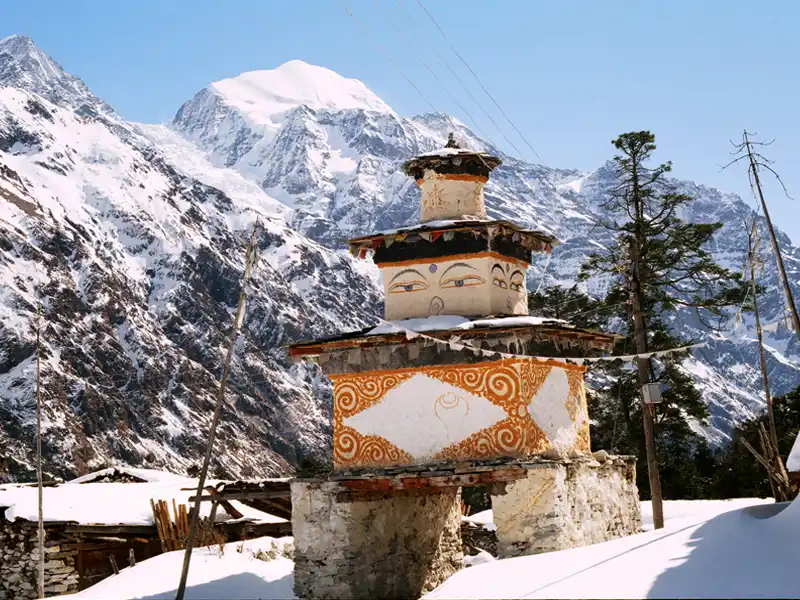
The Tsum Valley embodies Tibetan Buddhist culture with grace, displaying authentic traditions alongside breathtaking scenery. Surrounded by the majestic Ganesh Himal and verdant forests, the region is home to communities with deep ancestral roots that still practice the ancient Bon religion. The unique language spoken by the locals enriches the cultural environment, giving visitors a truly immersive and unforgettable experience.


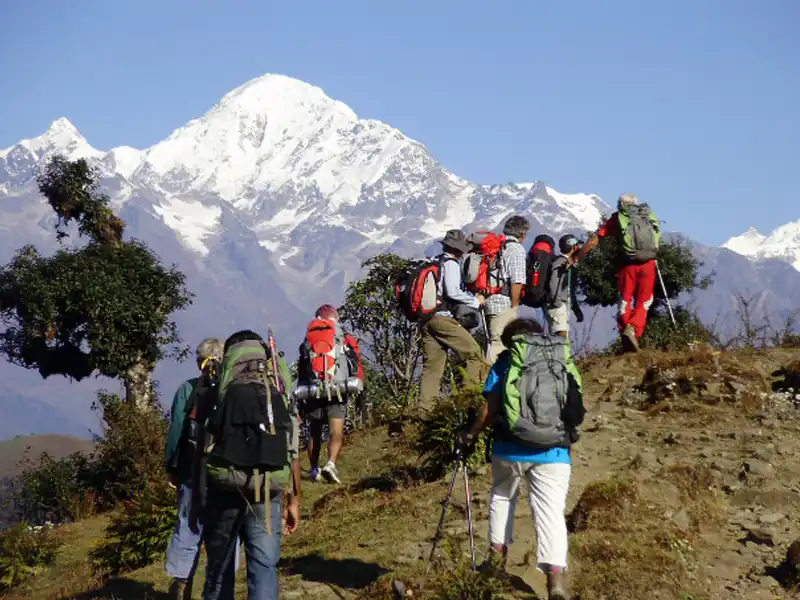
The Tsum Valley Trek is a beautiful blend of nature, spirituality, and culture. This unique opportunity allows for in-depth experiences with Nepal's rich natural and cultural heritage. This trek is a wonderful choice for travelers looking for a meaningful and unique adventure because it showcases beautiful landscapes and a wide range of cultures. The Tsum Valley Trek is an amazing journey that can change your views in surprising ways. At every step, you can see a new wonder.

Tsum Valley Trek Highlights


  • Pristine Landscapes: The Tsum Valley Trek takes you through the untouched beauty of Nepal's Manaslu region, with lush forests, charming countryside, and the impressive sight of Ganesh Himal.

  • Buddhist Culture: Immerse yourself in the enduring influence of Tibetan Buddhist culture, where you will witness locals practicing the ancient Bon religion and communicating in their distinctive dialect.

  • Sacred Atmosphere: Tsum Valley opened to trekkers in 2008 and remains untouched by modern development. The valley's sacred atmosphere reveres animals and testifies to its commitment to non-slaughter.

  • Cultural Immersion: The trek serves as a gateway to Nepal's diverse cultural heritage, providing a distinctive and immersive experience as you investigate the region's customs.

  • Off-the-Beaten-Path Adventure: The Tsum Valley Trek challenges trekkers both physically and culturally while offering a rare and rewarding off-the-beaten-path adventure.

  • The Holy Hidden Valley of Happiness: Tsum Valley is an adventure that will leave a lasting impression because it combines cultural immersion with the splendor of nature.

  • Land of Non-Laughter: The region of Tsum Valley is commonly referred to as the "land of non-slaughter," a place where compassion for all living beings is deeply ingrained in the culture and way of life of the locals.


Trip Itinerary

Day 01: Arrive in Kathmandu

A representative from Manaslu Trek will greet you upon your arrival in Kathmandu and escort you to your hotel. To commence your journey on a distinguished note, we will host a welcome dinner in the evening featuring authentic Nepalese cuisine and a cordial welcome drink.

Transfer: 30-45 min | Accommodation: Hotel | Meal: Welcome Dinner

Day 02: Full day City Tour in Kathmandu Valley

Today, you'll have the opportunity to explore Kathmandu with our knowledgeable city tour guide. Our itinerary includes several notable sites:

  • SWOYAMBHUNATH , also referred to as the monkey temple, is accessible by a steep set of steps and offers stunning views of Kathmandu.
  • BOUDHANATH STUPA has many traditional gompas hung with strings of multi-colored prayer flags; it attracts many Sherpas and Tibetans for the circumambulations of the stupa (koras).
  • PASHUPATINATH is a Hindu temple with burning ghats on the banks of the Bagmati River.
  • KATHMANDU DURBAR SQUARE, which is one of the old capitals of the Kathmandu valley, has a blend of Hindu and Buddhist temples

You will learn more about the architectural, religious, and historical significance of these famous sites from our informed guide. Get ready to be enthralled by the distinct charm and spiritual atmosphere of Kathmandu.

Sightseeing: 7-8 Hours | Accommodation: Hotel | Meal: Breakfast

Day 03: By Private Transportation: Kathmandu - Gorkha (1,135m/140km)

After breakfast in Kathmandu, you will drive to Gorkha on the Prithvi Highway, which takes about 4 to 5 hours and passes through beautiful countryside, river valleys, terraced farmlands, and traditional villages, with scenic views of rolling hills and occasional glimpses of the Trishuli and Marsyangdi rivers along the way. When you arrive in Gorkha, you will check into your hotel and have some time to relax before leaving in the late afternoon or early evening to visit the historic Gorkha Durbar, which is perched on a hill overlooking Gorkha town and is the ancestral home of King Prithvi Narayan Shah, the founder of modern Nepal. From the palace, you can enjoy panoramic views of the surrounding hills, valleys, and, on clear days, distant Himalayan peaks. Next, take a walk through Gorkha city, exploring the local market and streets to learn about everyday life, local culture, and traditional architecture before returning to your hotel for the night.

Transfer: 140km, 5-6 hours |  Accommodation: Hotel l Meal: Breakfast, Lunch, Dinner

Day 04: By 4WD Jeep: Gorkha - Barpak (1,945m). Trek to Laprak (2,100m)

After a breakfast at Gorkha, you will drive to Barpak (1,945 m), a scenic drive through winding mountain roads, terraced hillsides, and traditional villages, offering impressive views of the surrounding landscapes. Barpak is a historic Gurung village known for its rich culture and as the epicenter of the 2015 earthquake. After visiting Barpak's friendly community and beautiful views, you hike to Laprak, going up through forests and stone steps to the beautiful ridge of Momche Danda (2,900 m), where you can see the Ganesh Himal and Buddha Himal mountains in all their glory. After 5–6 hours of walking, you reach the traditional Gurung village of Laprak (2,200 m) from the ridge. There, you are greeted with warm hospitality and stunning views of the hills.

Transfer: 58km, 2-3 hours |  Walk: 5-6 hours |  Altitude Gain: 930 m |  Altitude Loss: 770 m | Accommodation: Lodge l Meal: Breakfast, Lunch, Dinner

Day 05: Laprak - Khorla Benshi (975m)

After a hearty breakfast, the day begins with a descent through the stone-roofed maze of Laprak to cross the Jyabru Khola suspension bridge, followed by a steady climb past vibrant pink sorghum fields to the cultural goldmine of Singla (2,300 m). From this sacred chorten viewpoint, where the Kutang and Sringi Himal ranges dominate the horizon, the trail descends over 1,000 meters through dense oak and rhododendron forests, which is physically demanding. As you wind through the remote Gurung settlement of Khorla (1,750 m), the crisp alpine air gives way to subtropical warmth, taking you past papaya trees and local weavers to the lush banks of the Budhi Gandaki River. After navigating steep, rocky steps and a suspension bridge, the journey ends in Khorlabenshi (970 m).

Walk: 7-8 Hours    |  Altitude Gain: 470 meters |  Altitude Loss: 1,640 meters | Accommodation: Lodge l Meal: Breakfast, Lunch, Dinner

Day 06: Khorlabenshi - Jagat (1,370m)

TAfter having breakfast in Khorlabenshi, the path winds its way along the riverbank until it reaches the natural hot springs of Tatopani (930 m). Here, the steaming stone taps provide a peaceful morning ritual. After that, the path climbs over a high ridge and makes its way to Doban (1,070 m). Following the traversal of a massive suspension bridge and the traversal of rugged cliffside staircases at the confluence of the Shiar Khola, the trek enters a dramatic gorge that features a spectacular cantilever bridge that is bolted directly into the vertical rock face. The wide, sandy riverbanks of Yaruphat (1,170 m) are reached by this man-made marvel, which is then followed by a final rocky ascent into the stone-paved village of Jagat (1,340 m). The distinctive high-mountain architecture and mandatory permit checkpost at Jagat, which serves as the official gateway to the Manaslu and Tsum Valley Restricted Areas, serve to mark your official entry into the protected wilderness. 

Walk: 6-7 Hours |  Altitude Gain: 620 meters    |  Altitude Loss: 160 meters | Accommodation: Lodge l Meal: Breakfast, Lunch, Dinner

Day 07: Jagat - Lokpa (2,240m).

After breakfast and permit verification, the trek begins with a breathtaking ascent to Salleri, which offers stunning views of the snow-capped Sringi Himal and towering waterfalls. Before reaching the critical junction of Eklebhatti (1,600 m), the path leads through the prosperous Gurung plateau of Philim (1,590 m), which is distinguished by traditional dry-stone architecture and vibrant terraced fields. The path eventually reaches the junction. After crossing a high suspension bridge and turning right, you will leave the main Manaslu Circuit and enter a remote wilderness made up of ancient pine and rhododendron forests. At the end of the day, you will begin a strenuous and switchback-heavy ascent to Lokpa, which sits at an elevation of 2,240 meters. Lokpa is the quiet sentinel of the Tsum Valley, where the sudden absence of mule trains and the presence of the Ganesh Himal range herald your arrival in this important high-altitude sanctuary.  

Walk: 6-7 Hours |  Altitude Gain: 800 meters    |  Altitude Loss: 230 meters | Accommodation: Lodge l Meal: Breakfast, Lunch, Dinner

Day 08: Lokpa - Chumling (2,386m)

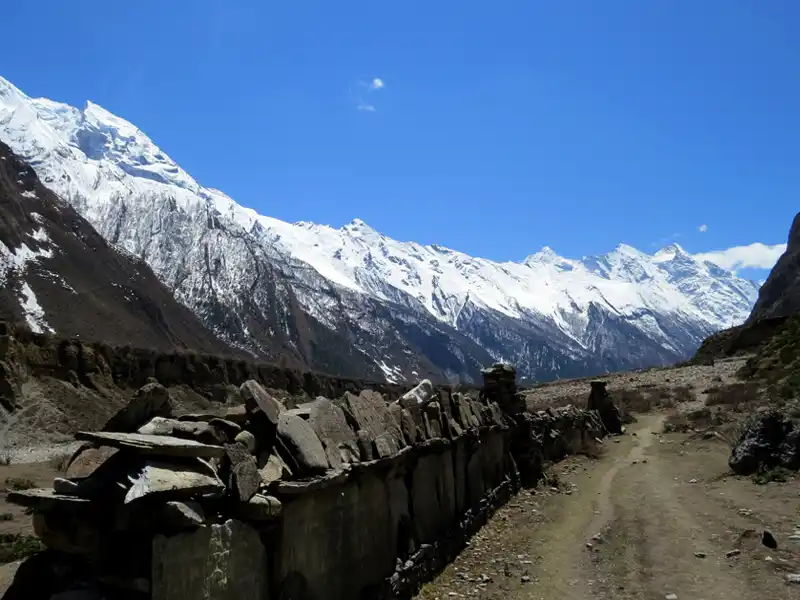
After breakfast, the trek enters a primitive wilderness of pine and rhododendron, descending steeply to the roaring Shiar Khola before crossing the suspension bridge, which serves as the physical gateway to the inner Tsum Valley. The trail then transforms into a strenuous Himalayan staircase, with narrow cliffside trails and relentless stone switchbacks rewarding hikers with sweeping views of Ganesh Himal and Baudha Himal. As the terrain levels out into the terraced fields of Chumling (2,385 m), the rugged gorge gives way to Lower Tsum's spiritual heart, which is marked by ancient Mani walls, sacred Chortens, and traditional stone architecture. This 4-5 hour trek offers an engaging introduction to Tsumba culture; however, it is critical to follow local etiquette by passing Buddhist monuments in a clockwise direction and keeping an eye out for falling rocks along the steep, narrow sections. 

Walk: 4-5 Hours |  Altitude Gain: 710 meters    |  Altitude Loss: 310 meters | Accommodation: Lodge l Meal: Breakfast, Lunch, Dinner

Day 09: Chumling - Chhokangparo (3,031m)

After breakfast in the Chumling, the trail goes over a suspension bridge and through the lush greenery of Rainjam. As you leave the humid river zone, the air gets thinner, and the weather gets drier. As the journey continues, there is a steady, steep climb up stone switchbacks. The climbers are rewarded with stunning views of the Ganesh Himal as they leave the dense rhododendron forests behind. Once you get to the high ridge, the land flattens out into a wide, sunny valley floor at Chhokangparo, which is the official entrance to Upper Tsum and is known for its traditional stone homes with flat roofs and huge, holy Mani walls. This day hike will be your first night above 3,000 meters. Stay hydrated and take it easy while you enjoy the "Sacred Valley of Non-violence" and maybe even a cup of traditional Tibetan butter tea with the friendly locals.

Walk: 6-7 Hours |  Altitude Gain: 1,070 meters    |  Altitude Loss: 180 meters | Accommodation: Lodge l Meal: Breakfast, Lunch, Dinner

Day 10: Chhokangparo - Nile (3,361m)

From the twin villages of Chhokangparo, the trail leads through fields of buckwheat and barley to the traditional settlement of Lamabagar, surrounded by the majestic Himalchuli and Ganesh Himal ranges. A spiritual highlight comes near Burji, where a short detour leads to the sacred Milarepa Piren Phu Cave, a cliffside sanctuary where the legendary Tibetan saint meditated that now houses ancient murals and a revered rock footprint. After taking in the peaceful surroundings, you will walk through the historic village of Chule (3,347 m), which is famous for its impressive Mani walls and large school. Then, you cross a sturdy bridge over the Shiar Khola. The 5-6 hour journey ends with a gentle climb to the Nile (3,361 m), a charming high-altitude village with stone-walled houses that serves as your final base before ascending to Mu Gompa. To ensure a smooth experience, remember to follow cave etiquette by removing your shoes, applying high-SPF sunscreen against the intense high-altitude sun, and staying hydrated as you settle in for the night at over 3,300 meters.

Walk: 6-7 Hours |  Altitude Gain: 1,070 meters    |  Altitude Loss: 180 meters | Accommodation: Lodge l Meal: Breakfast, Lunch, Dinner

Day 11: Hike to Mu Gompa (3700m)

After breakfast in Nile, the day hike begins with a steady morning ascent along the Shiar Khola's western bank through a stark, alpine landscape of seasonal yak pastures. The trail gradually ascends to Mu Gompa (3,700 m), the largest and highest monastery in the Tsum Valley. Established in 1895, this sacred site houses invaluable religious texts such as the Kangyur, a life-sized statue of Avalokiteshwara, and revered images of Guru Padmasambhava and Tara. For those seeking a "top of the world" experience, an optional trek leads further to the historic Dephyudonma Gompa (4,060 m), one of the valley's oldest nunneries, founded by Lama Serap of Nile Ladrang, with unparalleled views of glaciers and the Tibetan border. This 4-6 hour round trip should begin by 7:00 a.m. to avoid the midday clouds and capture the best photography light before a quick, scenic descent back to Nile for the evening. Hikers should carry a light pack with a down jacket and high-energy snacks, take advantage of the available drinking water sources, and follow traditional etiquette by dressing modestly and removing headwear when entering these ancient prayer halls.

Walk: 5-6 Hours |  Altitude Gain: 480 meters    |  Altitude Loss: 40 meters | Accommodation: Lodge l Meal: Breakfast, Lunch, Dinner

Day 12: Nile - Gho (2,530m)

After breakfast in Nile, the trail follows the Shiar Khola downstream on a wide, mostly flat path through the fertile valley. There are stunning views of the Pika Glacier and the Ganesh Himal range's tall peaks. You get to Rachen Gompa, an important nunnery built by the Ngak-pa sect in 1905 that is known for its beautiful Buddhist murals and large collection of statues. From Rachen Gompa, the road goes south through the twin villages of Lar and Phurbe to Chhekampar, which is the largest settlement in Upper Tsum and is made up of the villages of Chheko and Par joined together. It has traditional Tibetan-style stone houses with stacks of firewood on top, and there are several teahouses that make it a great place to stop for lunch. The trail goes down steeper for 2.5–3 hours after Chhekampar. It goes from a dry alpine landscape to a forest of blue pine and rhododendrons, crossing a few suspension bridges over the Shiar Khola on its way to Gho, a small, quiet village at a lower elevation where the air is noticeably warmer and more comfortable. Along the way, don't forget to look left at the mani walls and chortens, and ask permission before taking pictures inside Rachen Gompa. As you descend toward Gho, keep an eye out for yellow-flowering Himalayan gorse and the fresh scent of pine. 

Walk: 5-6 Hours    |  Altitude Gain: 70 meters    |  Altitude Loss: 870 meters | Accommodation: Lodge l Meal: Breakfast, Lunch, Dinner

Day 13: Gho - Gumba Lungdang (3,200m)

From Gho, the trail gently descends through peaceful pine and rhododendron forests to the confluence of the Shiar Khola and Sarpu Khola, arriving at the small settlement of Dumje, the day's lowest point and a quiet junction where water bottles should be refilled before the exposed climb ahead. After crossing a suspension bridge over the Sarpu Khola, the route sharply ascends and begins a demanding climb to Gumba Lungdang, zigzagging through dense, moss-covered forest and, in spring, brilliant rhododendrons, with a few "false peaks" along the way that test patience and pacing. As you finally reach the ridge, the nunnery appears as an eagle's nest against the massive backdrop of Ganesh Himal (Yangra), one of the region's oldest and most significant nunneries, with arguably the best view of Ganesh Himal I (7,422 m) in the entire Tsum Valley. Accommodation in the nunnery's guest rooms is simple, with basic meals prepared by the nuns, and if you arrive before sunset, you may have the rare opportunity to witness the evening puja, when the deep sounds of horns and drums echo hauntingly across the surrounding mountain walls.

Walk: 5-6 Hours    |  Altitude Gain: 980 meters    |  Altitude Loss: 110 meters | Accommodation: Lodge l Meal: Breakfast, Lunch, Dinner

Day 14: Hike to Ganesh Himal Base Camp (4,200m)

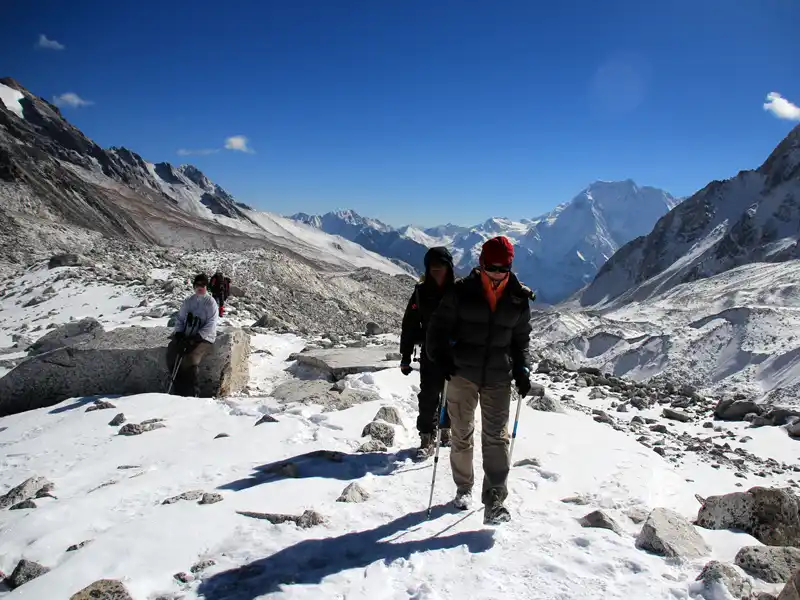
After breakfast, the route begins directly behind the nunnery with a steep climb through dense rhododendron and pine forest, where the narrow trail can be slippery in morning dew or after rain. The scenery drastically shifts as you rise above the tree line onto the Toro Gompa Glacier's lateral moraine. Here, the path becomes faint, and you must carefully scramble over large, unstable boulders and loose scree to find your way. Previous hikers have left small stone cairns. Reaching Ganesh Himal Base Camp—more a broad, rocky expanse than a defined campsite—you find yourself standing directly beneath Ganesh Himal I (7,422 m), with sweeping views of Ganesh II and IV and the massive glacier icefall, at an altitude of roughly 4,200 m, where it’s important to be alert to any signs of altitude discomfort and descend promptly if symptoms arise. The return journey is demanding, with knee-testing descents over loose moraine and a steep, jarring drop back through the forest, so plan to be back at the Gumba by mid-afternoon before temperatures fall and clouds build.

Walk: 6-7 Hours    |  Altitude Gain: 930 meters    |  Altitude Loss: 930 meters | Accommodation: Lodge l Meal: Breakfast, Lunch, Dinner

Day 15: Gumba Lungdang - Lokpa (7hrs)

After breakfast in Gumba Lungdang, you begin a steep descent by retracing the ridge down through rhododendron and pine forest, where the sharply dropping, sometimes slippery trail makes trekking poles especially helpful, eventually reaching the small settlement of Dumje, a convenient spot for a short rest or snack before continuing. From Dumje, instead of crossing back toward Gho, the route follows the southern bank of the Shiar Khola westward on a relatively gentle, undulating path through deep, ancient forest to Ripchet, one of the most traditional villages in the valley, distinguished by dry-stone houses with wooden roofs and a quieter, more shaded atmosphere that makes it an excellent place for lunch and observing local agricultural life. The final stage leaves the open Tsum Valley plateau and descends steeply from the Ripchet fields into a narrow gorge, crossing a long suspension bridge over the Shiar Khola to rejoin the main trail, followed by a short uphill climb and some narrow cliff-side sections before reaching Lokpa. Lokpa, the entrance to the Tsum Valley, is situated high above the thunderous meeting point of the Shiar Khola and Budhi Gandaki.

Walk: 7-8 Hours    |  Altitude Gain: 550 meters    |  Altitude Loss: 1,970 meters | Accommodation: Lodge l Meal: Breakfast, Lunch, Dinner

Day 16: Lokpa - Tatopani (875m)

From Lokpa, the trail goes down to where the Tsum Valley meets the main Manaslu route. Along the way, it goes by the small settlement of Eklebhati, which is a nice place to stop for a tea break. After that, there is a short but steady climb to Philim, a big and prosperous Gurung village. Here, you need to stop at the Manaslu Conservation Area Project (MCAP) office to get out of the Tsum Valley restricted area. From Philim, the path goes down through terraced fields of millet and maize. It goes by the traditional village of Sirdibas and over a long suspension bridge to reach Jagat, a pretty stone-paved village that is a popular place to stop for lunch and a major entrance to the area. After Jagat, the valley gets narrower, and the trail goes on to Yaruphat. At Yaruphat, you cross a dramatic cantilever bridge that is bolted directly into a sheer cliff above the raging river. From there, you can choose from a mix of forest and rock paths that lead to Doban, which is where the Shiar Khola and the Budhi Gandaki meet. The last part of the trip is below 1,000 meters, where the air is warmer and more humid. Along the riverbank, it goes by streams and waterfalls on its way to Tatopani, a village on a hill. There are stone taps in the middle of the village that let natural hot springs flow. This is a great way to soak your tired legs after the long descent and relax.

Walk: 8-10 Hours |  Altitude Gain: 360 meters    |  Altitude Loss: 1,350 meters | Accommodation: Lodge l Meal: Breakfast, Lunch, Dinner

Day 17: By 4WD Jeep: Tatopani to Kathmandu

After breakfast in Tatopani, the drive to Kathmandu in a 4WD jeep commences with an exhilarating off-road descent along narrow dirt tracks that have been carved into the Budhi Gandaki river valley. The route passes through Machhakhola, a critical hub for Manaslu trekkers, and the vehicle navigates rocky riverbeds, occasionally crossing small waterfalls. The tight, narrow road necessitates careful driving. The dirt road from Soti Khola gradually widens as you continue toward Arughat, a bustling trading town that is ideal for a quick tea or snack break. The road feels slightly more "civilized" while remaining unpaved. Leaving the river behind, the jeep ascends dusty, winding hill roads through ridges and small farming villages to reach Dhading Besi, where the blacktop commences. It then continues south to Malekhu, which is renowned for its fried fish and serves as an ideal snack stop. Ultimately, the jeep merges onto the Prithvi Highway for a steady climb over the Thankot pass into the Kathmandu Valley, completing a scenic drive that combines off-road thrills with smooth highway cruising.

Transfer duration: 167km, 8-9 Hours    |  Accommodation: Hotel l Meal: Breakfast, Lunch

Day 18: Free day in Kathmandu for self shopping an other activities

Today, we have a free day to explore the vibrant city of Kathmandu on our own. You may want to spend the day indulging in souvenir shopping, wandering through the colorful streets and bazaars, or savoring the local cuisine. You could also visit some of the popular tourist attractions in the city, such as Bhaktapur or Patan, which showcase Nepal's rich cultural and historical heritage. Alternatively, you could engage in other activities like hiking, biking, or adventure sports, or relax and rejuvenate in one of the city's many spas and wellness centers. Whatever you choose to do, make sure to soak up the unique sights, sounds, and flavors of this beautiful city.

Accommodation: Hotel l Meal: Breakfast

Day 19: Transfer to Kathmandu International airport for departure

Today, we will transfer to Kathmandu International Airport for our departure. After enjoying a hearty breakfast at the hotel, we will gather our belongings and go to the airport. We will ensure we reach the airport in time to complete all the necessary formalities and board our flight. Before we bid farewell to this enchanting country, take one last look at the breathtaking views of the Himalayas and take a moment to appreciate the warm hospitality and kindness of the Nepalese people. This marks the end of our tour, and we hope you had a memorable and enjoyable time in Nepal.

Meal: Breakfast

Cost & Dates

The Tsum Valley Trek 2026 cost on the website applies to groups of 6–12 people. However, private trips for groups of two or more can be organized upon request. A group booking of 12 or more people can offer a maximum discount with one free trip. Clients' travel date preferences can be accommodated, but the trek cost depends on group size, duration, accommodation type, and additional activities or services.

  • Group Size: The cost of the trip will depend on the size of the group.
  • Hotel Accommodation Category and Client's Budget: The cost may also vary based on the accommodation category and budget preference of the client.
  • Itinerary Modification: Our trekking itinerary can be modified according to your time and requirements, and the cost will be adjusted accordingly.
  • Additional Services: If you require additional services, the cost will be adjusted accordingly based on mutual understanding.
  • Trekking Staff: The cost is also affected by the number of Trekking Guides, Assistant Guides, and extra porters required for the trip.
Please feel free to reach out to us with any questions or to book your trek.

Trip Dates Trip Cost Status Inquiry
March 15 - April 03, 2026 USD USD 1,600.00 Available Inquiry
April 10 - April 28, 2026 USD USD 1,600.00 Available Inquiry
October 10 - October 28, 2026 USD USD 1,650.00 Available Inquiry
October 25 - November 12, 2026 USD USD 1,650.00 Available Inquiry

Cost Includes:

  • Airport pick-up and drop-off services in private transportation before and after the trek.
  • Hotel Accommodation: 4 Nights in Kathmandu at a twin-sharing room on a BB plan.
  • City Cultural Tour in Kathmandu with a city tour guide and all the entrance and monument fees.
  • Transportation: Kathmandu - Barpak and Soti Khola - Kathmandu with Nepalese crew.
  • Breakfast, Lunch, and Dinner during the Tsum Valley Trek.
  • Best available teahouse or lodge with a twin-sharing room for accommodation during the trek.
  • Trekking Staff: A well-experienced English-speaking Trekking Guide, Assistant Guide for a group of over 6 trekkers, and porters (2:1) including their daily allowance, meal, and accommodation.
  • Accidental and medical insurance for the Nepalese team.
  • Trekking Permits: Restricted Area Permit (RAP) for Tsum Valley and Manaslu Conservation Area Project (MCAP) entry permit fee.
  • All government applicable taxes
  • Travel agency service charge.

Trip FAQ

Q: Why is the Tsum Valley Trek?

A: In the Manaslu region of Nepal, the Tsum Valley Trek is a relatively less frequented route that is rich in cultural and historical significance. This route traverses the Tsum Valley, renowned for the Tibetan influence on its culture and traditions.


Q: How long is the Tsum Valley Trek?

A: It takes around 12–16 days to finish the Tsum Valley Trek, but this time frame can vary based on the itinerary and the acclimatization plan.


Q: When is the best time to go on the Tsum Valley Trek?

A: The best times to go trekking in Tsum Valley are in the spring (March to May) and fall (September to November), when the weather is dry and the skies are clear. These are the finest times to go on the trek.


Q: What is the difficulty level of the Tsum Valley Trek?

A: The Tsum Valley Trek is a moderately difficult journey that calls for a considerable level of physical fitness and endurance. There are several difficult ascents and descents along the walk, and Mu Gompa, which is 3,700 meters in elevation, is the highest point on the trek.


Q: Is a permit required for the Tsum Valley Trek?

A: Yes, a permit is required for the Tsum Valley Trek. The trek falls under the restricted area, and a special permit is required, which can only be obtained through a registered trekking agency.


Q: What kind of accommodation is available on the Tsum Valley Trek?

A: The accommodation on the Tsum Valley Trek ranges from basic teahouses to homestays. The teahouses are simple but clean, and the rooms are generally shared. Homestays provide a more authentic experience and are an excellent opportunity to interact with the locals and learn about their culture and traditions.


Q: What are the highlights of the Tsum Valley Trek?

A: The highlights of the Tsum Valley Trek include exploring the picturesque Tsum Valley, visiting ancient monasteries, interacting with the locals, and experiencing their unique culture and traditions. The trek also provides stunning views of snow-capped mountains, including Manaslu and Ganesh Himal, and the opportunity to see diverse flora and fauna.

Most Popular

Manaslu Trekking Tours

Manaslu Circuit Trek
19 Days

The Manaslu Circuit Trek in Nepal is an incredible journey around Mount Manaslu, the country's eighth tallest mountain. It has beautiful views and provides ...

Discover More
Tsum Valley Trek
19 Days

The Tsum Valley Trek in Nepal's Manaslu region is popular with nature and culture lovers. This trek lets you explore lush forests and picturesque landscapes ...

Discover More
Lower Manaslu Trek
18 Days

The Lower Manaslu Trek showcases stunning landscapes and offers a unique cultural journey through the Himalayas. It allows trekkers to engage with local ...

Discover More
Manaslu Four High Pass Trek
28 Days

The Manaslu High Passes Trek is an exciting journey through the rugged terrain of the Manaslu region. Discover difficult mountain passes like Larkya La ...

Discover More