Upon your arrival in Kathmandu, Nepal, a friendly representative from Manaslu Trek will greet you at the airport and escort you to your hotel. This marks the beginning of your Langtang Gosainkunda and Helambu Trek adventure, offering a smooth and comfortable start to your journey in the Himalayan region.
In the evening, we host a special welcome dinner featuring authentic Nepalese cuisine, accompanied by a refreshing reception drink. This welcome evening also provides an opportunity to meet your fellow trekkers, discuss the Langtang Helambu Trek itinerary, and receive essential tips for trekking in the Himalayas, including acclimatization, packing, and safety advice. Starting your journey in Kathmandu allows you to ease into the adventure while enjoying the city’s vibrant culture and setting the stage for your unforgettable Himalayan trekking experience.
Transfer: 30-45 min |
Accommodation: Hotel |
Meal: Welcome Dinner
Today, explore the rich culture, history, and heritage of Kathmandu Valley on this full-day city tour before your Langtang Gosainkunda and Helambu Trek. The tour takes you to some of Kathmandu's most famous UNESCO World Heritage Sites, offering a perfect introduction to Nepalese art, architecture, and traditions with our professional English-speaking City Tour Guide:
- SWOYAMBHUNATH , also known as the Monkey Temple, is one of Kathmandu Valley’s most iconic Buddhist stupas. Perched on a hilltop, it offers panoramic views of Kathmandu city and features ancient shrines, prayer wheels, and intricate carvings. The site is a spiritual and cultural landmark, attracting both pilgrims and tourists.
- KATHMANDU DURBAR SQUARE is a UNESCO World Heritage Site and the historic heart of Kathmandu City. Known for its ancient palaces, temples, courtyards, and intricate wood carvings, it reflects Nepalese art, culture, and architecture. A visit to this iconic square offers a glimpse into the royal history of Nepal.
- BOUDHANATH STUPA is one of the largest and most important Buddhist stupas in Nepal and a UNESCO World Heritage Site. Known for its massive white dome, colorful prayer flags, and iconic Buddha eyes, it serves as a major center for Tibetan Buddhism. Visiting Boudhanath provides an immersive cultural and spiritual experience.
- PASHUPATINATH is one of Nepal’s most sacred Hindu temples, dedicated to Lord Shiva and located on the banks of the Bagmati River in Kathmandu. Famous for its intricate pagoda-style architecture, cremation ghats, and spiritual rituals, it offers visitors a deep cultural and religious experience.
Our knowledgeable guide will tell you interesting things about the religious, historical, and architectural importance of each landmark. Kathmandu is a unique city with a rich culture and a spiritual atmosphere that will make your city tour an interesting and memorable way to learn about Nepalese heritage.
Sightseeing: 7-8 Hours |
Accommodation: Hotel |
Meal: Breakfast
After breakfast in Kathmandu, the scenic drive to Syabrubensi becomes an adventurous and memorable journey to the gateway of the Langtang region. The route covers approximately 139 kilometers but takes a full day due to the winding mountain roads. Leaving the valley via the Prithvi Highway, the journey descends through Thankot Pass, follows the Mahesh Khola, and reaches Galchi before turning north onto the Pasang Lhamu Highway. The drive continues alongside the Trishuli River, passing terraced farmland, traditional villages, and lively bazaars, with a popular lunch stop at Trishuli Bazar. As the road climbs steeply toward Dhunche (2,030 meters), travelers enter Langtang National Park at the Kalikasthan checkpoint and are greeted with impressive views of the Ganesh Himal. Beyond Dhunche, the road narrows and becomes rougher, descending sharply to the riverbed before reaching Syabrubensi (1,460 meters). This riverside town is located at the confluence of the Bhote Koshi and Langtang Khola rivers and serves as the official starting point for the Langtang Valley, Gosaikunda, and Tamang Heritage treks.
Transfer: 139 km, 6-7 min |
Accommodation: Lodge I
Meal: Breakfast, Lunch, Dinner
After breakfast in Syabrubenshi, the trek begins with a suspension bridge crossing over the Bhote Koshi, followed by an eastward trail along the Langtang Khola, where the first stretch is relatively gentle, passing small hydro projects and farmland before the valley narrows into dense forest. After a couple of hours, the trail ascends steeply through oak, maple, and rhododendron jungle toward Bamboo (1,970 m), a common rest stop surrounded by bamboo groves that serve as habitat for the rare Red Panda, along with langur monkeys and Himalayan birds. From Bamboo, the trail becomes more demanding as it crosses the river again and climbs a series of steep stone switchbacks to Rimche (2,400 m), offering rewarding views back down the valley. A short and easier forest walk then leads to Lama Hotel (2,470 m), a small cluster of lodges nestled in a forest clearing. Throughout the day, the roaring Langtang Khola creates a powerful natural soundtrack, while the lush “green tunnel” of temperate forest—vibrant with blooming rhododendrons in spring and golden foliage in autumn—keeps the trek shaded and immersive, though the high Himalayan peaks remain hidden until higher elevations.
Walk: 5-7 Hours |
Distance: 11 km |
Altitude Gain: 1,100 m |
Altitude Loss: 70 m |
Accommodation: Lodge I
Meal: Breakfast, Lunch, Dinner
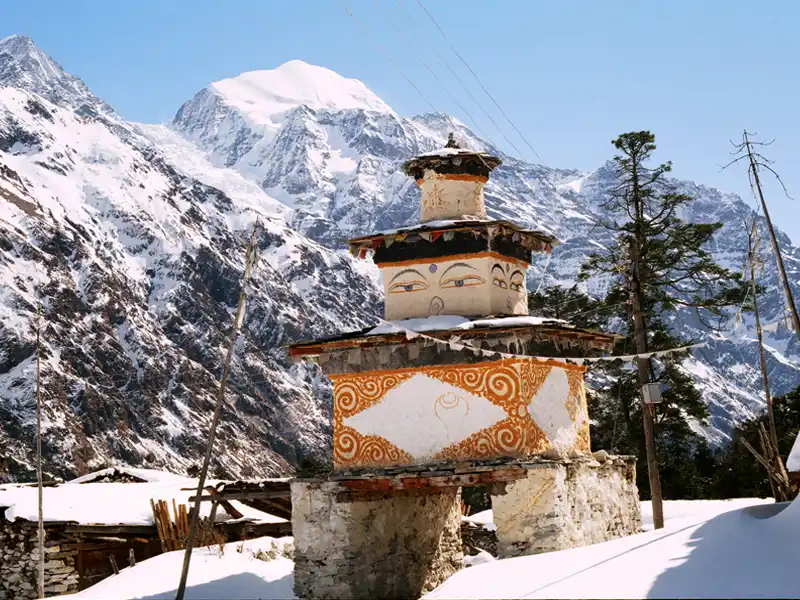
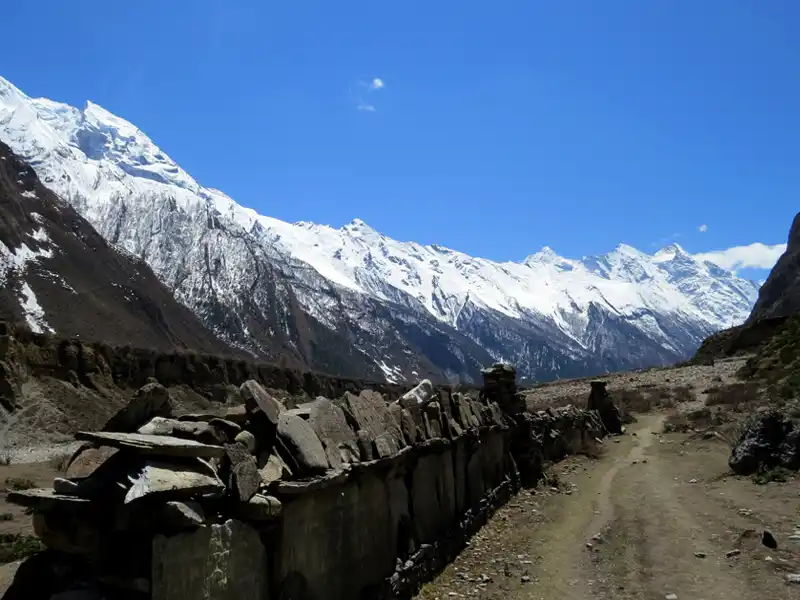
After breakfast in Lama Hotel, the trek begins with a steady ascent through dense forest toward Chhunama, a quiet clearing ideal for short breaks, before reaching Ghoda Tabela (2,970 m), where the valley opens dramatically and permits are rechecked; from here, trekkers are rewarded with their first stunning views of Langtang Lirung (7,227 m). Continuing along the widening valley above the tree line, the trail leads through alpine terrain and yak pastures to Thangshyap (3,140 m), a scenic lunch stop surrounded by peaks, before gradually ascending past mani walls and chortens toward Langtang Village (3,430 m), where a memorial honors those lost in the 2015 Nepal earthquake and a rebuilt settlement reflects the resilience of the local Tamang community. A final gentle walk brings you to Mundu (3,540 m), a more traditional village with stone houses that offers a quieter overnight stay and a better position for the next day’s trek to Kyanjin Gompa, all set within a dramatic U-shaped glacial valley where yak caravans, hanging glaciers, and Tibetan Buddhist cultural features define the landscape.
Walk: 5-7 Hours |
Distance: 13 km |
Altitude Gain: 1,080 m |
Altitude Loss: 40 m |
Accommodation: Lodge I
Meal: Breakfast, Lunch, Dinner
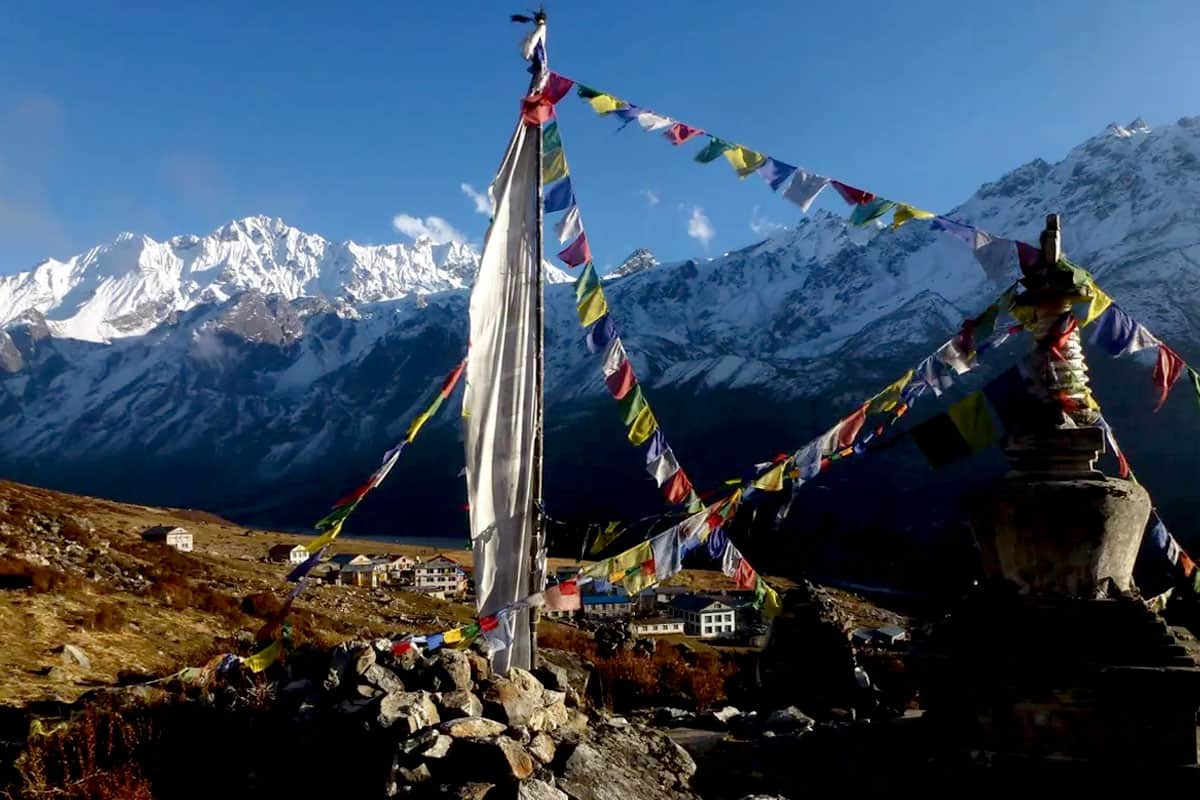
After breakfast in Mundu, the trek begins with a gentle climb along the northern side of the valley, passing ancient stone huts, yak pastures, and long mani walls—always crossed on the left in keeping with Buddhist tradition—while the Langtang Khola now flows as a peacefully braided stream across a wide floodplain. As the trail progresses, it crosses old glacial moraines, revealing dramatic Himalayan vistas with Langtang Lirung (7,227 m) dominating the north and Naya Kanga and the Ganja La range rising to the south, while the nearby Lirung Glacier occasionally echoes with the sounds of shifting ice. Arriving at Kyanjin Gompa (3,830 m), trekkers are welcomed by a picturesque village beneath Kyanjin Ri, home to a historic monastery and the famous yak cheese factory established with Swiss support. Surrounded by towering peaks such as Changbu, Dorje Lakpa, and Langshisha Ri, Kyanjin serves as a natural base camp for exploration, where afternoon acclimatization hikes—like ascending Kyanjin Ri (4,300 m) or walking toward a glacial lake—offer breathtaking panoramic views and help the body adjust to the high altitude.
Walk: 2-4 Hours |
Distance: 5 km |
Altitude Gain: 330 m |
Altitude Loss: 0 m |
Accommodation: Lodge I
Meal: Breakfast, Lunch, Dinner
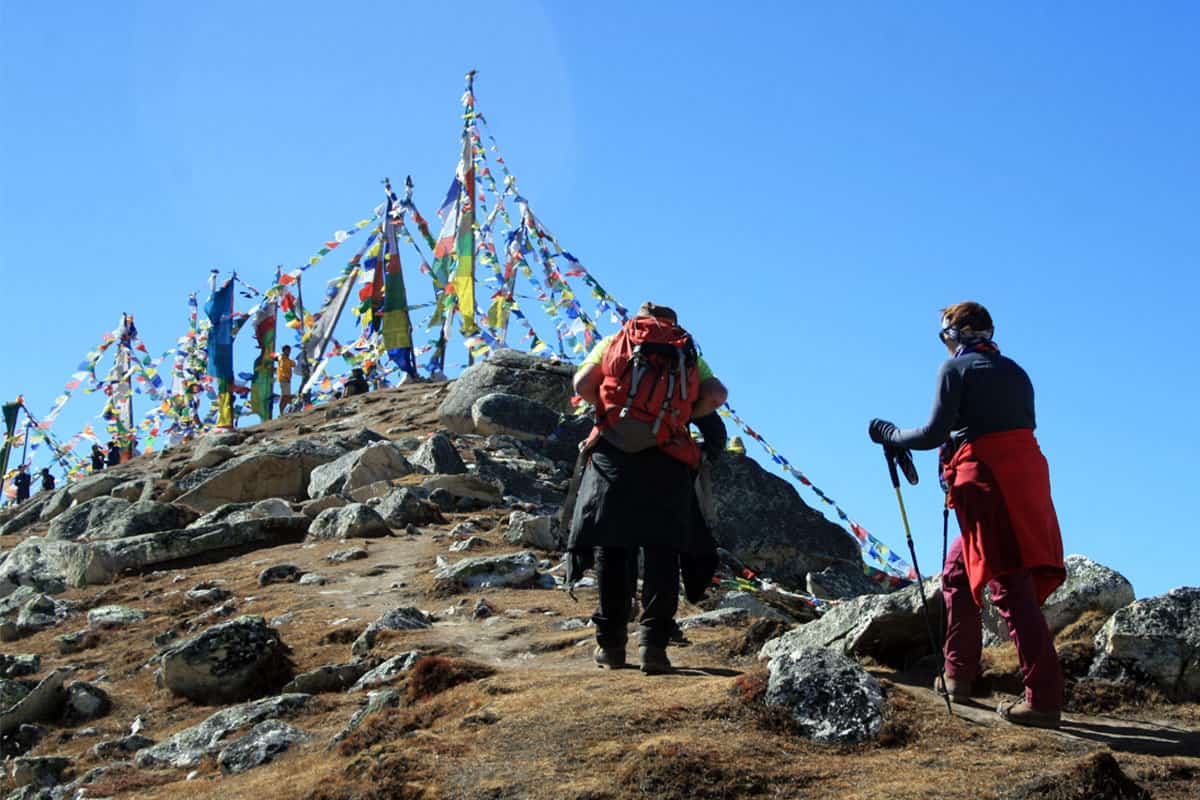
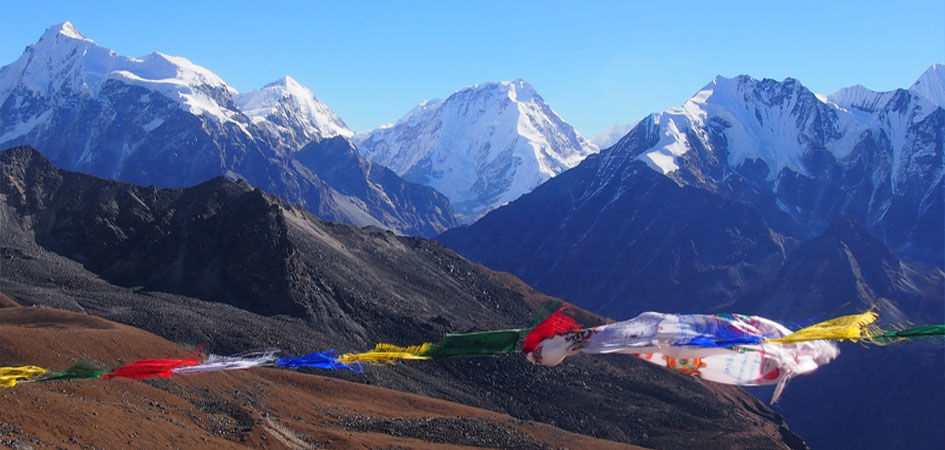
The hike to Tserko Ri from Kyanjin Gompa is best started early in the morning (around 5–6 AM) when the weather is clear and stable, beginning with a stream crossing and a steep uphill climb that quickly gains altitude. After the initial ascent, the trail eases slightly across a high alpine plateau before continuing through rocky switchbacks where the thin air makes every step slower and more demanding. The final section is a short but challenging scramble over boulders, leading to the summit at 4,984m, marked by colorful prayer flags and offering breathtaking 360-degree views of peaks like Langtang Lirung, Langshisha Ri, Dorje Lakpa, and Naya Kanga, along with distant views toward Tibet. After enjoying the panorama, you descend the same route back to Kyanjin by early afternoon, where the rest of the day is spent relaxing, rehydrating, and recovering—perhaps visiting the local monastery or yak cheese factory—before a peaceful evening by the lodge stove and a clear night under a sky full of stars.
Walk: 6-8 Hours |
Distance: 10 km |
Altitude Gain: 1,090 m |
Altitude Loss: 1,090 m |
Accommodation: Lodge I
Meal: Breakfast, Lunch, Dinner
After breakfast in Kyanjin Gompa, the descent begins with a gentle descent across the open glacial valley, offering a final look at Langtang Lirung before passing through Mundu and the rebuilt Langtang Village, where a quiet memorial honors those lost in the 2015 Nepal earthquake. The trail then continues downhill through alpine pastures and yak trails to Thangshyap and reaches Ghoda Tabela (2,970m), a common lunch stop where the wide valley begins to narrow again. From here, the descent becomes steeper as you re-enter dense forest, following stone steps and switchbacks through a lush “green tunnel” of rhododendron, oak, and maple, with the roaring Langtang Khola accompanying you down. By mid- to late afternoon, you arrive back at Lama Hotel (2,470 m), where the warmer, forested surroundings feel cozy after the exposed high-altitude landscapes, marking a clear transition from alpine terrain back to the temperate zone.
Walk: 7-9 Hours |
Distance: 18 km |
Altitude Gain: 50 m |
Altitude Loss: 1,410 m |
Accommodation: Lodge I
Meal: Breakfast, Lunch, Dinner
After breakfast in Lama Hotel, the trek begins with a pleasant descent through dense forest along the Langtang Khola, passing through Bamboo (1,970 m), where the warm, humid air and bamboo groves offer chances to spot Himalayan Langur or even the rare Red Panda. Continuing downhill, you reach Pahiro (1,675 m), a key junction where the trail splits—right toward Syabrubensi and left toward Thulo Syabru—before beginning a steep and challenging climb away from the river. This ascent is the toughest part of the day, with zigzag stone steps and switchbacks leading up a sun-exposed ridge, gradually transitioning from thick forest to terraced farmland and scattered teahouses. Reaching Thulo Syabru (2,210 m), trekkers are rewarded with a beautiful ridge-top village known for its traditional stone houses, rich Tamang culture, Buddhist monuments, and sweeping views of the Ganesh Himal and even distant Manaslu on clear days.
Walk: 5-6 Hours |
Distance: 10 km |
Altitude Gain: 500 m |
Altitude Loss: 790 m |
Accommodation: Lodge I
Meal: Breakfast, Lunch, Dinner
After breakfast in Thulo Syabru, the trek begins with a steep ascent through village alleys, terraced fields, and traditional homes, gradually opening up to wide views of the valley and distant trails toward the Langtang Valley. Climbing steadily for about 1.5 to 2 hours past chortens and farmland, you reach Dursagang (2,660m), a small rest stop with teahouses and expansive views of the Ganesh Himal and distant Tibetan peaks. From here, the trail enters a dense and peaceful forest of oak, hemlock, fir, and rhododendron, forming a lush “green lung” where the climb continues along shaded zigzag paths in increasingly thinner air, with chances to spot wildlife like the Himalayan Monal, langur monkeys, and, occasionally, the Red Panda. The route then reaches Phoprang Danda (3,190m), a windy ridge and popular lunch spot offering distant views of Manaslu and the Annapurna range, before continuing along a forested ridge past viewpoints toward Dhunche and a government agriculture post to finally arrive at Shin Gompa (Chandan Bari). Known for its peaceful monastery and local yak cheese factory, Shin Gompa provides a serene atmosphere and a comfortable overnight stop before heading toward higher elevations.
Walk: 5-6 Hours |
Distance: 7 km |
Altitude Gain: 1,390 m |
Altitude Loss: 0 m |
Accommodation: Lodge I
Meal: Breakfast, Lunch, Dinner
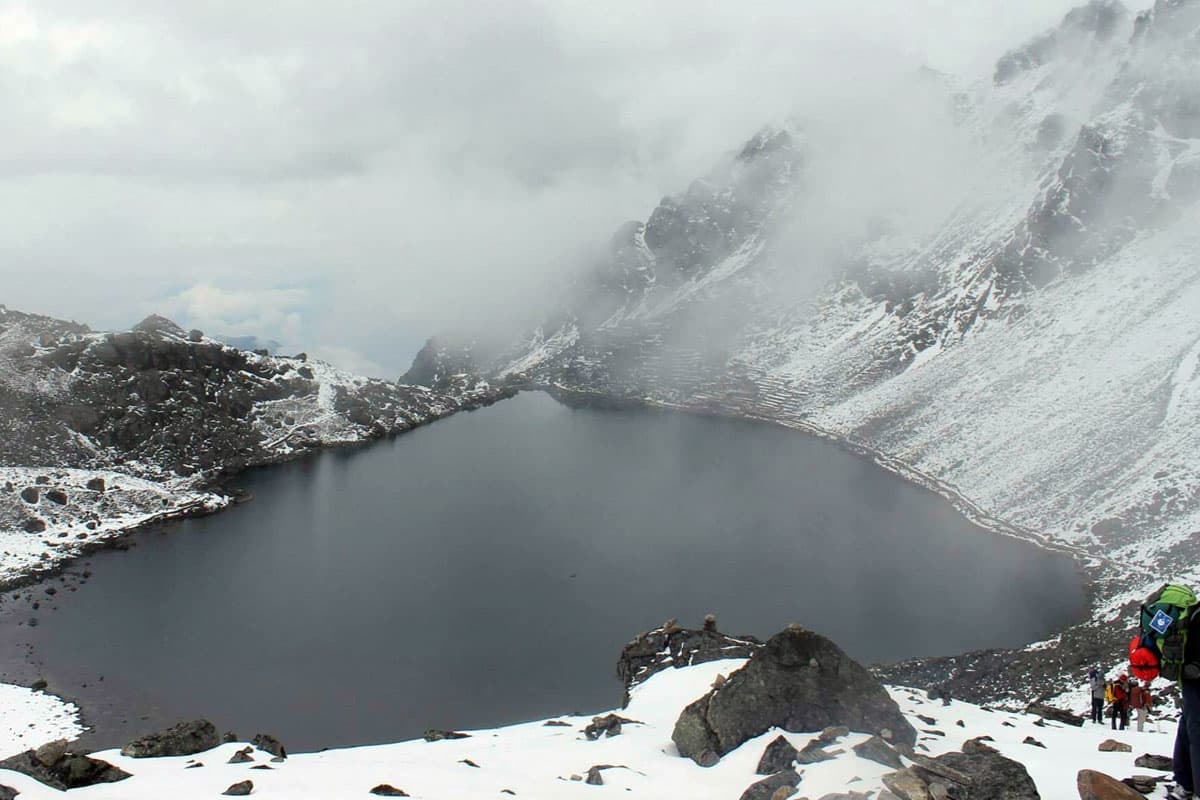
After breakfast in Shin Gompa, the trek begins with a steady climb through misty forests of fir, oak, and rhododendron inside Langtang National Park, leading to Cholangpati (3,650m), the last sheltered stop before the tree line ends. From here, the trail ascends onto an open ridge toward Lauribina (3,910m), where stunning panoramic views of Annapurna, Manaslu, Ganesh Himal, and Langtang Lirung unfold. Continuing along a dramatic high ridge, the trail passes sacred spots like Saraswati Kunda and Bhairav Kunda before reaching the turquoise waters of Gosaikunda (4,380m), a revered alpine lake surrounded by rugged peaks and stone lodges. Deeply significant in Hindu and Buddhist traditions, Gosaikunda is believed to have been created by Lord Shiva during the Samudra Manthan, and it becomes especially vibrant during the Janai Purnima, when pilgrims gather to bathe in its holy waters.
Walk: 5-7 Hours |
Distance: 6 km |
Altitude Gain: 800 m |
Altitude Loss: 10 m |
Accommodation: Lodge I
Meal: Breakfast, Lunch, Dinner
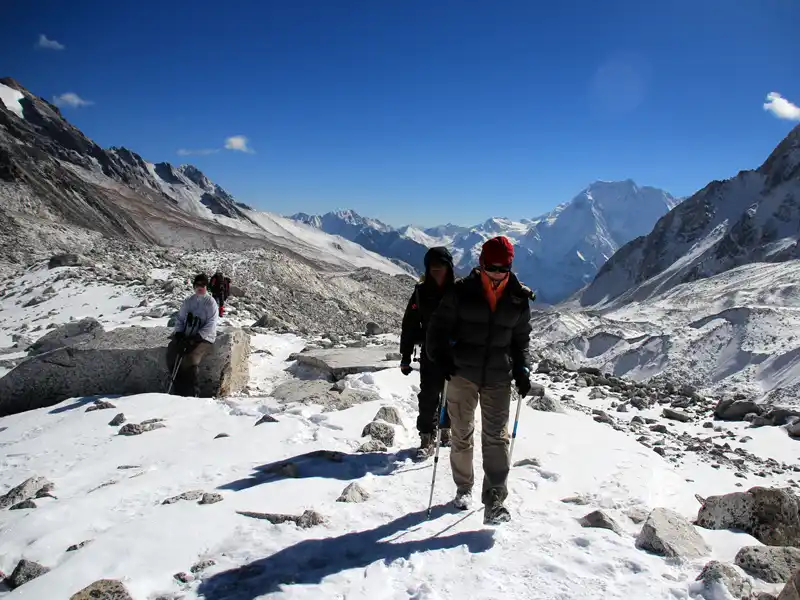
After breakfast in Gosainkunda Lake, the trek begins with a steep climb along the northern edge of the lake toward Lauribina La (4,610 m), where thin air makes the ascent challenging but rewarding, with views back over sacred lakes like Saraswati Kunda, Bhairav Kunda, and Surya Kunda, often shimmering or partially frozen beneath the surrounding peaks. At the summit of the pass, marked by prayer flags and stone cairns, trekkers are rewarded with wide views of the Langtang Range to the north and the Helambu hills to the south before beginning a very steep and rocky descent to Phedi (3,740m), a small stopover for rest and lunch. From Phedi, the trail continues into a remote “Himalayan rollercoaster” of constant ups and downs across scree slopes, narrow ridges, and boulder fields—passing through rugged cave-like sections that give Ghopte its name—before re-entering sparse sub-alpine forest. Ghopte itself is a tiny, quiet settlement with only a few basic lodges, often wrapped in mist, offering simple accommodation and limited facilities in a truly remote mountain environment.
Walk: 6-8 Hours |
Distance: 11 km |
Altitude Gain: 400 m |
Altitude Loss: 1,410 m |
Accommodation: Lodge I
Meal: Breakfast, Lunch, Dinner
After breakfast in Ghopte, the trek begins with a high ridge traverse on a narrow “Himalayan flat” trail through boulders and rhododendron, followed by a steady 1.5–2 hour climb to Tharepati (3,640 m), a windy ridge junction offering sweeping views of the Langtang Range, Dorje Lakpa, and the distant Gauri Shankar, where trekkers often stop for tea or lunch in sheltered lodges. From Tharepati, the route turns sharply east into a very steep “knee-cracking” descent of nearly 1,000 meters through dense forest of hemlock, fir, and oak, with changing vegetation and possible sightings of the Red Panda and Himalayan pheasants. As the trail drops into the Melamchi Valley, it opens into terraced fields, chortens, and a small stream crossing before entering Melamchi Gaon, a clean and well-organized Hyolmo village known for its traditional stone-and-wood architecture, monastery linked to the legend of Milarepa, apple orchards, and barley fields, set within a classic V-shaped river valley carved by the Melamchi Khola.
Walk: 6-8 Hours |
Distance: 8 km |
Altitude Gain: 350 m |
Altitude Loss: 1,200 m |
Accommodation: Lodge I
Meal: Breakfast, Lunch, Dinner
After breakfast in Melamchi Gaon, the trek begins with a steep descent through terraced fields into a lush, humid forest filled with ferns and rhododendron, eventually reaching the Melamchi Khola (1,890 m), where trekkers cross a suspension bridge over the rushing turquoise river and take a short rest. From here, the trail climbs sharply up the opposite side of the valley, passing small hamlets, barley and buckwheat fields, and increasingly frequent chortens and mani walls that signal approach to a Buddhist settlement. Continuing uphill, the route follows well-marked switchbacks lined with sacred structures before entering Tarke Ghyang through a traditional gateway. Known as one of the oldest and most important villages in the Helambu region, Tarke Ghyang is deeply rooted in Hyolmo culture, famous for its historic monastery—rebuilt after damage in the 2015 earthquake—and its legends of “One Hundred Horses,” while also being recognized for its rich woodcarving traditions, warm hospitality, and strong Buddhist heritage.
Walk: 4-5 Hours |
Distance: 8 km |
Altitude Gain: 670 m |
Altitude Loss: 640 m |
Accommodation: Lodge I
Meal: Breakfast, Lunch, Dinner
After breakfast in Tarke Ghyang, the trek begins with a gentle ridge walk through an enchanting forest of pine, fir, and rhododendron, where soft trails covered in moss and fallen needles make for an easy and peaceful start. Along the way, trekkers pass through beautifully carved mani walls and chortens inscribed with “Om Mani Padme Hum,” reflecting the deep spiritual heritage of the Helambu Valley, while small hamlets and viewpoints offer glimpses over the Melamchi Valley and toward the Indrawati riverside. The trail gradually opens up as it approaches Sermathang (2,590 m), entering a landscape of apple orchards, terraced fields, and prayer flags through a welcoming village gate. Known as a cultural and agricultural hub of the Hyolmo people, Sermathang offers sweeping Himalayan views, including Ganesh Himal, Langtang Lirung, Dorje Lakpa, and even distant glimpses toward Mount Everest on clear days, while its monastery and apple orchards—famous for fresh fruit, dried apples, and local apple brandy—add a rich cultural and scenic finish to the journey.
Walk: 4-6 Hours |
Distance: 10 km |
Altitude Gain: 680 m |
Altitude Loss: 650 m |
Accommodation: Lodge I
Meal: Breakfast, Lunch, Dinner
After a breakfast in Sermathang, the trek begins with a peaceful ridge walk through the outskirts of Sermathang, offering final views of the Jugal Himal and Ganesh Himal before descending gently through rhododendron and pine forests to Kakani, a small ridge-top village with a stupa and teahouses where trekkers often stop for tea. From Kakani, the trail becomes steeper, dropping through changing vegetation from pine forest to broadleaf trees and ferns, then into terraced fields of millet and maize before reaching Dubhachaur, where the culture shifts from Hyolmo Buddhist villages to a mix of Brahmin, Chhetri, and Newar communities with more simple rural houses. The final stretch is a warm descent through rice terraces and farmland, where temperatures rise noticeably as you enter the humid river basin of the Melamchi Khola, eventually crossing a large suspension bridge into the busy trading town of Melamchi Pul Bazar, a vibrant market hub that also connects to the region’s major infrastructure, including the Melamchi Water Supply Project that brings drinking water to Kathmandu.
Walk: 6-8 Hours |
Distance: 17 km |
Altitude Gain: 100 m |
Altitude Loss: 1,870 m |
Accommodation: Lodge I
Meal: Breakfast, Lunch, Dinner
After breakfast in Melamchi Pul, the drive to Kathmandu begins with a scenic drive along the Melamchi Khola toward Zero Kilo, passing lush subtropical landscapes of orange groves, banana trees, and rice paddies, along with infrastructure from the Melamchi Water Supply Project. At Zero Kilo, the route joins the Araniko Highway and begins a steady climb toward Dhulikhel (1,550m), a historic Newari town offering a final panoramic view of the Himalayan range from Annapurna to Mount Everest. From there, the descent into the Kathmandu Valley brings a rapid cultural and environmental shift as the landscape turns into urban highways, passing landmarks like Sanga with its towering Kailashnath Mahadev statue and skirting the historic city of Bhaktapur before entering the busy city streets of Kathmandu. Arrival in the capital marks a major transition from mountain trekking life to urban comfort, where travelers check into hotels, enjoy hot showers, rest after days of trekking, and celebrate with a well-earned meal in the city.
Distance: 80 km, 4-6 hours |
Accommodation: Hotel I
Meal: Breakfast, Lunch
Today, we have a free day to explore the vibrant city of Kathmandu on our own. You may want to spend the day indulging in some souvenir shopping, wandering around the colorful streets and bazaars, or enjoying the local cuisine. You could also visit some of the popular tourist attractions in the city, such as Bhaktapur or Patan, which showcase Nepal's rich cultural and historical heritage. Alternatively, you could engage in other activities like hiking, biking, or adventure sports, or simply relax and rejuvenate in one of the city's many spas and wellness centers. Whatever you choose to do, make sure to soak up the unique sights, sounds, and flavors of this wonderful city.
Accommodation: Hotel I
Meal: Breakfast
Today, we will transfer to Kathmandu International Airport for our departure. After enjoying a hearty breakfast at the hotel, we will gather our belongings and make our way to the airport. We will ensure that we reach the airport well in time to complete all the necessary formalities and board our flight. Before we bid adieu to this enchanting country, take one last look at the breathtaking views of the Himalayas and take a moment to appreciate the warm hospitality and kindness of the Nepalese people. This marks the end of our tour, and we hope you had a memorable and enjoyable time in Nepal.
Meal: Breakfast
Langtang Gosainkunda Lake Trek cost on the website applies to 6-12 people groups. However, private trips for groups of two or more can be organized upon request. A group booking of 12 or more people can avail of a maximum discount with one free trip. Clients' travel date preferences can be accommodated, but the trek cost depends on factors such as group size, duration, accommodation type, and additional activities or services.
- Group Size: The cost of the trip will depend on the size of the group.
- Hotel Accommodation Category and Client's Budget: The cost may also vary based on the accommodation category and budget preference of the client.
- Itinerary Modification: Our trekking itinerary can be modified according to your time and requirements, and the cost will be adjusted accordingly.
- Additional Services: If you require additional services, the cost will be adjusted accordingly based on mutual understanding.
- Trekking Staff: The cost is also affected by the number of Trekking Guides, Assistant Guides, and extra porters required for the trip.
| Trip Dates | Trip Cost | Status | Inquiry |
| USD USD 1,850.00 | | Inquiry |
Cost Includes:
- Airport pick up and drop off on a private vehicle.
- Full-day sightseeing in Kathmandu with English-speaking Tour Guide
- Hotel: 4 nights Hotel accommodation in Kathmandu at twin sharing a room on BB plan.
- Completely lodge trekking, including breakfast, lunch, dinner, and room during the trekking periods.
- Trekking Permit: Lantang National Park and TIMS Card entrance fees.
- All the monuments and entrance fees in Kathmandu.
- Transportation: Kathmandu to Syabrubenshi and Melamchi to Kathmandu on private.
- Trekking Staffs: English Speaking Trekking Guide, Assistant Guide, and Porter (2:1 Porter)
- First aid and medical kits
- All government taxes and official charges.
- Accidental and medical Insurance of Nepalese staff.
Cost Excludes:
- Lunch & Dinner in Kathmandu.
- International air ticket.
- Nepal visa fees.
- Rescue/ emergence and insurance cost.
- Beverage and hard drinks and alcohol.
- Nepal entry visa fee and airport tax during the departure.
- Personal equipment and personal expenses.
- In case of natural calamities, i.e. political unrest, flight cancellation due to weather, landslides, etc., the extra charge should be borne by itself.
Please feel free for any queries. What is the Langtang Gosainkunda Lake Trek?
Langtang Gosainkunda Lake Trek is a popular trekking route in Nepal that takes you through the stunning Langtang Valley, a region known for its incredible natural beauty and unique cultural heritage. The trek typically takes around 13-16 days to complete and includes a visit to the sacred Gosainkunda Lake, which is one of the most important pilgrimage sites in the region.
How difficult is the Langtang Gosainkunda Lake Trek?
Langtang Gosainkunda Lake Trek is considered to be a moderately difficult trek, with a maximum altitude of around 4,600 meters (15,091 feet). The trail can be steep and rocky in places, and you will need to be in good physical condition to complete the trek. However, it is generally less challenging than some of the other treks in the region, such as the Everest Base Camp Trek or the Annapurna Circuit Trek.
When is the best time to do the Langtang Gosainkunda Lake Trek?
The best time to do the Langtang Gosainkunda Lake Trek is during the spring (March to May) or the fall (September to November), when the weather is mild and dry, and the views are stunning. During these seasons, the skies are usually clear, and the temperatures are not too hot or too cold. The monsoon season (June to August) can bring heavy rain and landslides, while the winter season (December to February) can be very cold and snowy.
What permits do I need for the Langtang Gosainkunda Lake Trek?
To do the Langtang Gosainkunda Lake Trek, you will need to obtain a TIMS (Trekkers' Information Management System) card, which costs Rs 2,000, as well as a Langtang National Park permit, which costs Rs 3,000. These permits can be obtained in Kathmandu or at the entrance to the national park.
What should I pack for the Langtang Gosainkunda Lake Trek?
You should pack warm, waterproof clothing, sturdy hiking boots, a good-quality backpack, a sleeping bag, and a first aid kit. You may also want to bring a water purification system or tablets, as well as a camera to capture the stunning views along the way. It's important to pack light, as you will be carrying your own gear for most of the trek.
What kind of accommodation is available on the Langtang Gosainkunda Lake Trek?
Along the Langtang Gosainkunda Lake Trek, there are a variety of accommodation options available, ranging from basic teahouses to more luxurious lodges. Teahouses are typically the most affordable option and offer basic amenities like a bed, shared bathroom, and meals. Some of the larger lodges offer more comfortable rooms, private bathrooms, and hot showers, but these are more expensive.
Can I do the Langtang Gosainkunda Lake Trek on my own, or do I need a guide?
While it is possible to do the Langtang Gosainkunda Lake Trek on your own, it is highly recommended to hire a guide and/or a porter. A guide can provide valuable local knowledge, ensure your safety, and help you navigate the trail, while a porter can carry your gear and reduce the physical burden on you. Hiring a guide and/or porter also supports the local economy and ensures that your trek is conducted in an environmentally sustainable way.

 Langtang Gosainkunda and Helambu Trekking