Nar Phu Valley-Tilicho Lake Trek

Nar Phu Valley-Tilicho Lake Trek

Annapurna Nar Phu Valley-Tilicho Lake Trek


Nar Phu Valley Tilicho Lake Trek – A Remote Himalayan Adventure in Nepal

The Nar Phu Valley and Tilicho Lake Trek is one of Nepal’s most extraordinary and less traveled trekking adventures. This route combines the remote Nar Phu Valley Trek with the iconic Tilicho Lake Trek. It is a challenging yet rewarding journey that offers a perfect blend of untouched Himalayan landscapes, ancient Tibetan-influenced culture, and stunning high-altitude scenery. This trek is ideal for experienced trekkers seeking an authentic wilderness experience in the Annapurna region.


Explore Remote Villages, Canyons, and Himalayan Culture

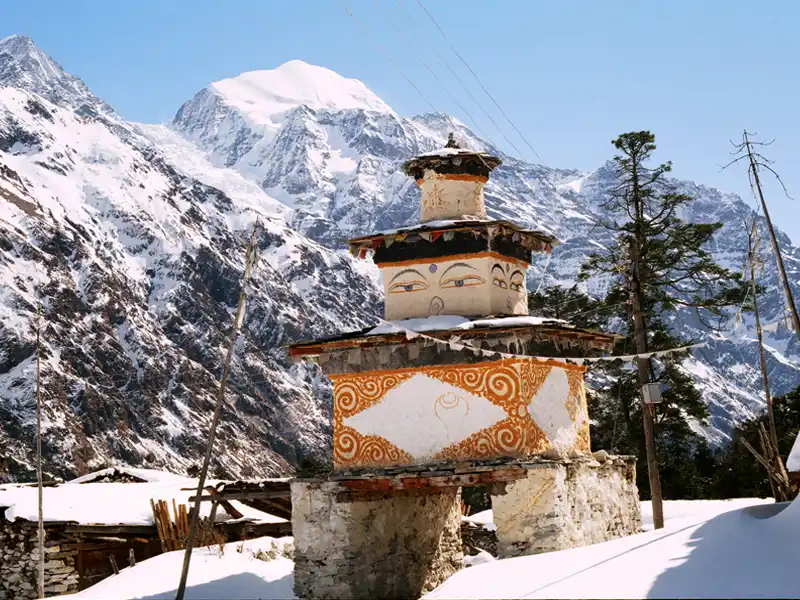
The Nar Phu-Tilicho Lake Trek takes you deep into the remote Nar and Phu Valleys, which were opened to trekkers only in 2003. This adventure provides a unique glimpse into an ancient Tibetan Buddhist way of life. Along the route, trekkers pass through traditional stone villages, navigate narrow canyon trails, and explore lush alpine forests, all while admiring striking rock formations shaped by centuries of natural forces.

This culturally rich journey allows you to experience authentic Himalayan traditions, including encounters with local yak herders, visits to ancient Gompas (monasteries), and the opportunity to witness centuries-old customs that remain largely untouched by modernization.


Tilicho Lake – The World’s Highest Alpine Lake

A major highlight of the Nar Phu Tilicho Lake Trek is reaching the stunning Tilicho Lake, which sits at an elevation of 4,919 meters, making it one of the highest lakes in the world. Surrounded by towering Himalayan peaks and dramatic cliffs, the lake provides breathtaking scenery and an unforgettable high-altitude experience.


High Passes and Spectacular Mountain Views

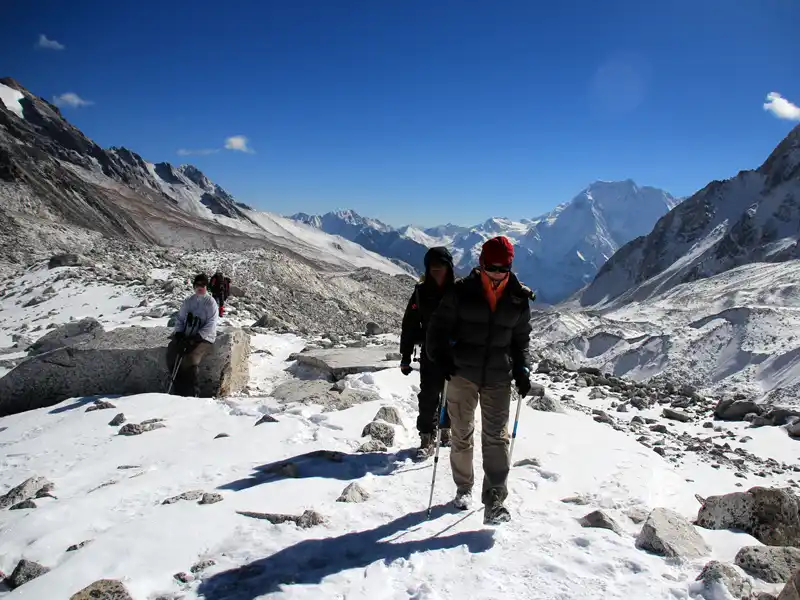
The Nar Phu Valley – Tilicho Lake Trek includes several challenging high passes: Kang La Pass (5,320 m), Tilicho Pass (5,230 m), and Mesokanto La Pass (5,099 m). Each of these high-altitude crossings requires stamina and preparation, but they offer trekkers stunning panoramic views of the Annapurna range, Tilicho Peak, and the surrounding Himalayan giants. These dramatic viewpoints are highlights of the trek, making each ascent both physically demanding and incredibly rewarding.


Diverse Landscapes from Subtropical Forests to Alpine Desert

The Nar Phu Valley to Tilicho Lake Trek traverses various vegetation zones, from lush subtropical forests to arid, semi-desert high-altitude terrains. This stark environmental transition enhances the trekking experience, highlighting Nepal’s rich and diverse Himalayan ecology.


A Challenging Trek for Experienced Adventurers

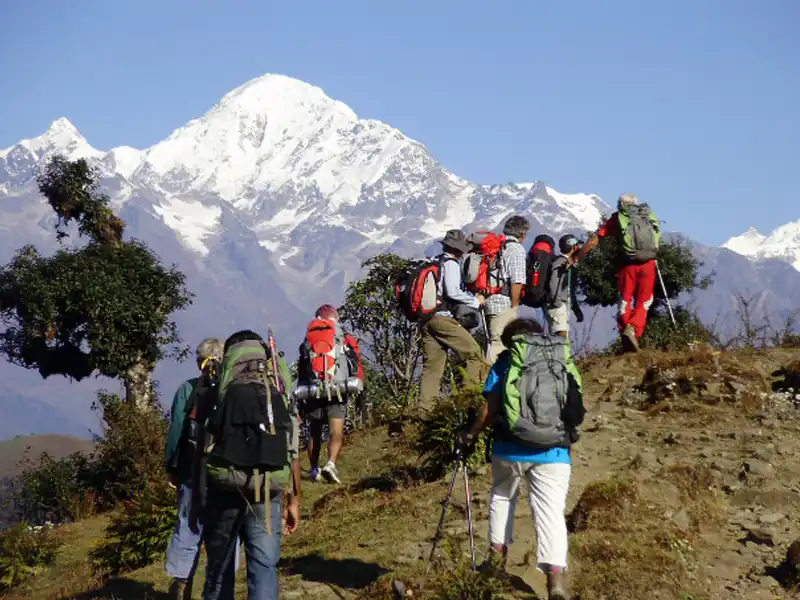
The Nar Phu Tilicho Lake Trek, known for its high altitude and remote terrain, is best suited for physically fit and well-prepared trekkers. The trek includes long trekking days, steep ascents, and rugged paths, offering an authentic adventure in the heart of the Himalayas. In return, trekkers enjoy pristine natural beauty, cultural immersion, and some of the most breathtaking mountain landscapes in Nepal.


The Nar Phu Valley to Tilicho Lake Trek is an excellent choice for trekkers looking for a remote and less crowded adventure in Nepal. This trek combines the highlights of both the Nar Phu Valley and Tilicho Lake routes, offering rich Tibetan-influenced Himalayan culture. Trekkers can immerse themselves in ancient traditions, visit monasteries, and experience the lifestyle of local communities. The trek presents challenges as you cross high passes and explore diverse landscapes, ranging from lush valleys to rugged alpine terrain. This makes it a truly unforgettable trekking experience.

Nar Phu-Tilicho Lake Trek Highlights


  • Diverse Landscapes: Explore a range of landscapes, from secluded villages and winding canyons to vibrant forests and stunning rock formations, creating a continuously shifting and enchanting backdrop.

  • World's Highest Lake: Experience the stunning beauty of Tilicho Lake, the highest lake in the world at 4,919 meters above sea level, surrounded by majestic snow-capped mountains.

  • Challenging high mountain passes: Cross legendary Himalayan passes including Kang La Pass (5,320 m), Tilicho Pass (5,230 m), and Mesokanto La Pass (5,099 m), each offering spectacular panoramic mountain views.

  • Vegetation Zones: Explore diverse vegetation zones, ranging from vibrant subtropical areas to arid semi-deserts, offering an exciting and varied trekking adventure.

  • Yak Herders and Gompas: Meet local inhabitants, mainly yak herders, and visit traditional gompas to learn about their age-old customs and beliefs.

  • Panoramic Annapurna mountain views: Enjoy close-up views of the majestic Annapurna range and the surrounding Himalayan giants throughout the trek.

  • Rich Tibetan-influenced culture: Experience ancient monasteries, prayer flags, traditional stone villages, and the unique lifestyle of local yak herders.

  • Cultural Enrichment: The trek offers a deep dive into the cultural richness of medieval Tibetan life, allowing for authentic encounters with yaks, gompas, and other fascinating aspects of the local community.

  • Remote Nar Phu Valley exploration: Discover one of Nepal’s most isolated and least-traveled regions, offering an authentic glimpse into ancient Tibetan-influenced Himalayan life in the Nar and Phu villages.

  • Adventure for the Intrepid: Perfect for intrepid trekkers seeking a unique and challenging experience, this trek offers breathtaking natural beauty, rich cultural immersion, and spectacular mountain views.

  • Less crowded and off-the-beaten-path trail: Enjoy a peaceful trekking experience away from the mainstream routes, perfect for adventure seekers seeking solitude and authenticity.

  • Wild & Untouched Trails: Experience a less-crowded trekking route that offers solitude, adventure, and raw natural wilderness.

  • Perfect Combination Trek: A unique blend of the Nar Phu Valley Trek and Tilicho Lake Trek, offering both cultural depth and high-altitude adventure in one journey.


Trip Itinerary

Day 01: Arrive in Kathmandu

Upon your arrival in Kathmandu, Nepal, a friendly representative from Manaslu Trek will greet you at the airport and escort you to your hotel. This marks the beginning of your Nar Phu Valley & Tilicho Lake Trek adventure, offering a smooth and comfortable start to your journey in the Himalayan region.

In the evening, we host a special welcome dinner featuring authentic Nepalese cuisine, accompanied by a refreshing reception drink. This welcome evening also provides an opportunity to meet your fellow trekkers, discuss the Nar Phu Valley & Tilicho Lake Trek itinerary, and receive essential tips for trekking in the Himalayas, including acclimatization, packing, and safety advice. Starting your journey in Kathmandu allows you to ease into the adventure while enjoying the city’s vibrant culture and setting the stage for your unforgettable Himalayan trekking experience.

Transfer: 30-45 min | Accommodation: Hotel | Meal: Welcome Dinner

Day 02: Full day City Tour in Kathmandu Valley

Today, explore the rich culture, history, and heritage of Kathmandu Valley on this full-day city tour before your Nar Phu Valley & Tilicho Lake Trek. The tour takes you to some of Kathmandu's most famous UNESCO World Heritage Sites, offering a perfect introduction to Nepalese art, architecture, and traditions with our professional English-speaking City Tour Guide:

  • SWOYAMBHUNATH , also known as the Monkey Temple, is one of Kathmandu Valley’s most iconic Buddhist stupas. Perched on a hilltop, it offers panoramic views of Kathmandu city and features ancient shrines, prayer wheels, and intricate carvings. The site is a spiritual and cultural landmark, attracting both pilgrims and tourists.
  • KATHMANDU DURBAR SQUARE is a UNESCO World Heritage Site and the historic heart of Kathmandu City. Known for its ancient palaces, temples, courtyards, and intricate wood carvings, it reflects Nepalese art, culture, and architecture. A visit to this iconic square offers a glimpse into the royal history of Nepal.
  • BOUDHANATH STUPA is one of the largest and most important Buddhist stupas in Nepal and a UNESCO World Heritage Site. Known for its massive white dome, colorful prayer flags, and iconic Buddha eyes, it serves as a major center for Tibetan Buddhism. Visiting Boudhanath provides an immersive cultural and spiritual experience.
  • PASHUPATINATH is one of Nepal’s most sacred Hindu temples, dedicated to Lord Shiva and located on the banks of the Bagmati River in Kathmandu. Famous for its intricate pagoda-style architecture, cremation ghats, and spiritual rituals, it offers visitors a deep cultural and religious experience.

Our knowledgeable guide will tell you interesting things about the religious, historical, and architectural importance of each landmark. Kathmandu is a unique city with a rich culture and a spiritual atmosphere that will make your city tour an interesting and memorable way to learn about Nepalese heritage.

Sightseeing: 7-8 Hours | Accommodation: Hotel | Meal: Breakfast

Day 03: Kathmandu to Khudi Khola (790m)

After an early breakfast in Kathmandu, set out on a scenic overland journey along the Prithvi Highway, descending the winding Nagdhunga pass and tracing the Trishuli River, where rafters and riverside villages add life to the route, before pausing for a typical lunch stop around Malekhu or Mugling; continuing onward, the road reaches Dumre, where it turns north and narrows into a more rugged mountain track that follows the Marsyangdi River, revealing terraced hillsides, cascading waterfalls, and the first distant views of Himalayan peaks, including Lamjung Himal, as you approach Besisahar, the main gateway to the Annapurna region, where trekking permits such as RAP and ACAP are commonly checked, and after a brief stop or transfer, the journey concludes with a short but bumpy 30–45 minute drive via Bhulbhule to Khudi Khola, a peaceful Gurung village at the confluence of rivers, marking the traditional starting point of the legendary Annapurna Circuit trek.

Transfer: 177 km, 7-9 hours | Accommodation: Lodge I Meal: Breakfast, Lunch, Dinner

Day 04: Khudi Khola to Sirung (1,860 m)

The day begins at Khudi Khola, where the constant roar of the Marsyangdi River sets the tone as you cross a suspension bridge and immediately start ascending through lush lower hills, passing scattered homes and vibrant rice terraces on the way toward Bhulbhule; in this subtropical zone, the trail winds beneath broadleaf forests alive with birdlife like kingfishers and circling raptors, while cultural elements such as Mani walls and chortens begin appearing, signaling a gradual transition into Buddhist-influenced highlands, and by midday the route steepens into Nepal’s iconic stone staircases—often dubbed the “stairway to Sirung”—rewarding trekkers with breathtaking views of terraced hillsides that resemble giant green amphitheaters (or golden fields depending on the season), with a well-earned lunch stop in small villages like Taranche offering a nourishing Dal Bhat meal to refuel for the climb; as the afternoon progresses, the trail gains elevation and the air turns cooler and crisper, eventually leading along ridge paths with expanding Himalayan vistas, including the Manaslu Range, Ngadi Chuli, and Himal Chuli, before reaching Sirung, a serene Gurung heritage village known for its traditional stone houses and warm community-based homestay experience, where guests are often welcomed with tika and garlands, enjoy evening Rodhi cultural programs with music and dance, and, if energy allows, can take a short sunset walk to witness the magical alpenglow illuminating the snow-capped peaks in hues of pink and orange.

Trekking: 5-7 hours | Altitude Gain: 1,070 m | Altitude Loss: 180 m | Accommodation: Lodge I Meal: Breakfast, Lunch, Dinner

Day 05: Sirung to Jagat (1,320m)

The day starts early from Sirung, where you can enjoy clear views of Nadi Chuli and Manaslu before descending through stone-paved paths and terraced farmland to the quiet village of Gairigaun. From here, the trail follows a scenic ridgeline with views of the deep Marsyangdi River gorge, leading to Shildunga, a perfect spot for a short rest. The path then continues with a steady descent through subtropical forests and small streams down to Mipra, a traditional cliffside hamlet surrounded by dramatic landscapes. From Mipra, the trail drops steeply toward the river valley, where the air becomes warmer, and the sound of the Marsyangdi River grows louder. It eventually reaches Syange, famous for its impressive waterfall and suspension bridge crossing, making it an ideal lunch stop. Afterward, the trek continues with a gradual uphill climb along a narrow trail carved into the cliffs above the river, offering stunning gorge views before arriving at Jagat, a historic stone village that once served as a toll station and now stands as a lively stop along the Annapurna trekking route.

Trekking: 6-8 hours | Altitude Gain: 100 m | Altitude Loss: 560 m | Accommodation: Lodge I Meal: Breakfast, Lunch, Dinner

Day 06: Jagat to Dharapani (1,960 m)

The day begins from Jagat, following stone-paved paths that descend briefly before climbing along a dramatic trail carved into the steep rock walls of the Marsyangdi Gorge, with the roaring river far below. Passing through bamboo patches and small settlements, you reach Chamje, where a stunning waterfall cascades down the opposite cliff, making it a perfect spot for a short break. From Chamje, the trail crosses a long suspension bridge and then climbs steeply up stone steps through rugged terrain, marking one of the toughest sections of the day. As the climb eases, you pass a chorten and enter Manang District, where the narrow gorge suddenly opens into a wide, sandy valley leading to Tal, a beautiful village set on a former lakebed with waterfalls and peaceful surroundings, ideal for lunch. In the afternoon, the trail continues across the flat river plain before crossing another bridge and gradually ascending through cool forests of pine, oak, and rhododendron. Passing small hamlets and impressive cliffside views, you finally reach Dharapani, a lively village decorated with prayer flags and stone structures, and an important junction connecting the Annapurna and Manaslu trekking routes.

Trekking: 6-8 hours | Altitude Gain: 860 m | Altitude Loss: 230 m | Accommodation: Lodge I Meal: Breakfast, Lunch, Dinner

Day 07: Dharapani to Koto (2,600 m)

The day begins from Dharapani, following a gentle trail along the Marsyangdi River to Bagarchap, a charming village with traditional Tibetan-style stone houses and a history marked by a past landslide. From here, the path gradually climbs through cooler air and changing vegetation to Danakyu, where a short rest is recommended before tackling the day’s toughest section. After crossing a small bridge, the trail turns steep, climbing steadily through dense forests of rhododendron, pine, and fir until reaching Timang, a beautiful village known for its breathtaking views of the Manaslu massif and Peak 29, making it a perfect lunch stop. In the afternoon, the trek becomes easier, following a more gradual path through peaceful forests to Thanchok, a quiet village with traditional stone houses and terraced fields. The trail then descends slightly through pine forests, crosses a suspension bridge, and continues to Koto, a calm and culturally important village that serves as the gateway to the remote Nar Phu Valley, offering a relaxing end to a diverse and rewarding day of trekking.

Trekking: 5-7 hours | Altitude Gain: 950 m | Altitude Loss: 220 m | Accommodation: Lodge I Meal: Breakfast, Lunch, Dinner

Day 08: Koto to Meta (3,640m)

The day begins at Koto, where you check your permits before leaving the main Annapurna trail and entering the remote Nar Phu Valley. Soon after, you cross a suspension bridge over the Marsyangdi River and head into a narrow gorge along the Nar Khola, walking on dramatic trails carved into cliffs and crossing small wooden bridges. As the valley gradually opens, the trail moves through dense forests of pine, oak, and rhododendron with a mix of short climbs and descents, leading to a simple shelter at Dharamshala, where you must stop for a packed lunch, since there are no teahouses along the way. After this break, the toughest part of the day begins with a steep climb up exposed switchbacks, leaving the forest behind and entering a dry, high-altitude landscape with alpine shrubs and rocky terrain. As you gain height, the air becomes thinner, but reaching Meta rewards you with wide, open valley views and stunning sights of Annapurna II and Lamjung Himal, marking a challenging yet unforgettable day in a truly remote Himalayan setting.

Trekking: 5-7 hours | Altitude Gain: 1,270 m | Altitude Loss: 280 m | Accommodation: Lodge I Meal: Breakfast, Lunch, Dinner

Day 09: Meta to Kyang (3,820m)

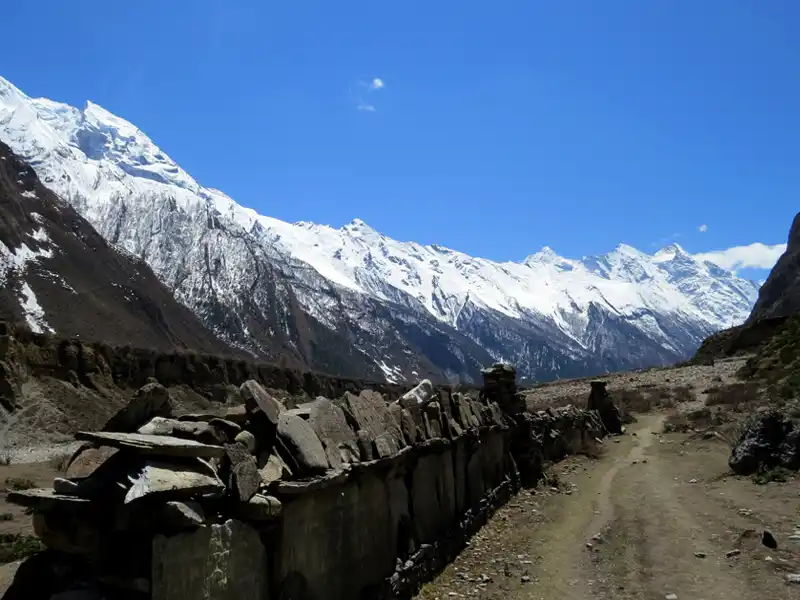
The trek from Meta to Kyang begins with a walk across undulating “Himalayan flat” terrain, where the trail winds through dry landscapes of juniper scrub, alpine shrubs, and scattered yak herder shelters. Along the way, you cross several small glacial gullies before gradually arriving at Chyakhu, a seasonal settlement marked by stone houses and prayer flags, where locals from Nar and Phu come to farm barley and graze livestock during summer, making it a good place for a short rest. From Chyakhu, the trail continues north along more exposed cliffside paths with dramatic views of deep river gorges far below and striking rock formations shaped by wind and erosion. After a steady traverse across this stark high-altitude landscape, you reach Kyang, another seasonal village with basic trekking lodges. The settlement is simple and quiet, often feeling remote and empty outside farming seasons, but it offers a peaceful resting point surrounded by vast, treeless Himalayan scenery and centuries-old mani walls and chortens that reflect the region’s deep trading and cultural history.

Trekking: 4-6 hours | Altitude Gain: 530 m | Altitude Loss: 270 m | Accommodation: Lodge I Meal: Breakfast, Lunch, Dinner

Day 10: Kyang to Phu Gaon (4,080m)

Leaving Kyang, the trail immediately enters a dramatic canyon landscape along the Nar Khola, where you walk between high plateau edges and the riverbed, surrounded by striking hoodoo rock formations and deep, narrow gorges. The path becomes more technical in sections, crossing loose scree slopes that require careful footing while the river continues far below in a tight canyon. As you move deeper into the valley, the terrain funnels toward a natural bottleneck, where you descend and cross bridges before climbing steep rock-cut steps, with ancient fortress ruins visible high on the ridges above. You then pass through a traditional stone chorten gate that marks the symbolic entrance to Phu Valley, where the landscape suddenly opens into a wide, amphitheater-like basin. From here, a final bridge and stone path lead you into Phu Gaon, a remarkable medieval-style village built from stone and stacked into the hillside, dominated by the historic Tashi Lhakhang Monastery. Phu is a culturally rich Bhotia settlement where traditional pastoral life still continues, and visitors are expected to respect local customs such as asking permission before taking photos and keeping mani walls on the right side when passing. If time and energy allow, a visit to the monastery offers stunning views of Himlung Himal and a deeper look into the region’s Tibetan Buddhist heritage.

Trekking: 3-5 hours | Altitude Gain: 400 m | Altitude Loss: 220 m | Accommodation: Lodge I Meal: Breakfast, Lunch, Dinner

Day 11: Excursion day

A rest and exploration day in Phu Gaon offers a rare chance to experience a traditional Tibetan-influenced mountain lifestyle at 4,080 meters while also helping your body acclimatize to the altitude. One of the main highlights is a visit to Tashi Lhakhang Monastery, a historic spiritual center perched on a ridge above the village, known for its ancient murals, prayer wheels, and strong connection to Tibetan Buddhism, with breathtaking panoramic views over the entire Phu Valley and its stone-built settlement. For those feeling strong, a hike toward Himlung Himal Base Camp provides an unforgettable high-altitude adventure across glacial moraines, frozen streams, and rocky terrain, with close views of peaks like Himlung, Nemjung, and Gyaji Kyang, often accompanied by sightings of blue sheep. In addition to these hikes, simply exploring the narrow stone alleys of Phu reveals its unique fortress-like design, ancient Dzong ruins, and daily pastoral life where locals tend yaks and barley fields. The day is also perfect for photography, especially during sunset when the rugged hills and stone village glow in warm, dramatic light, making Phu both a cultural treasure and a stunning Himalayan experience.

Accommodation: Lodge I Meal: Breakfast, Lunch, Dinner

Day 12: Phu to Junam (3,550m)

The day begins with a descent from Phu Gaon, leaving the stone-built “Lost Village” behind as the trail drops steeply toward the Phu Khola, crossing suspension bridges and passing long mani walls along the way. The surrounding landscape quickly opens into a wide, barren valley filled with dramatic hoodoo rock formations that resemble natural stone cathedrals. From here, the route continues downstream to Kyang, a seasonal settlement with ancient ruins and open plateaus once used as a winter base and even a historic stronghold in earlier decades. After a short break, the trail becomes more rugged and enters a narrower gorge on the way to Chyaka, where paths are often cut into cliffs and winding ledges above the river, with sparse vegetation of juniper and alpine scrub appearing across the slopes. Finally, the trek continues with a mix of gentle descents and small climbs to Junam, a peaceful meadow at a trail junction leading toward Nar Village. Junam offers a calm resting place with beautiful sunset views of surrounding peaks, including Tilicho Peak and the Gangapurna range, making it a scenic and quiet end to a dramatic valley walk.

Trekking: 4-5 hours | Altitude Gain: 370 m | Altitude Loss: 720 m | Accommodation: Lodge I Meal: Breakfast, Lunch, Dinner

Day 13: Junam to Nar Gaon (4,110m)

Leaving Junam, the trail gently descends toward the Nar Khola before crossing a sturdy suspension bridge, a key point that marks the beginning of the long climb toward Nar. After the river crossing, the path immediately turns into a steep ascent through a series of zig-zag switchbacks carved into the mountainside, where the effort is demanding due to the high altitude but is rewarded with increasingly wide views back toward the Phu Valley and surrounding peaks like Kang Guru and Pisang Peak. As you climb higher, the trail gradually levels out, and you pass through a striking entrance marked by colorful chortens and a long mani wall, symbolically welcoming you into the Nar Valley. From here, a short final stretch leads to Nar Gaon at 4,110 meters, a larger and more open settlement compared to Phu, with closely clustered stone houses, active barley fields, and yaks grazing nearby. Nar feels more agricultural and lively, with a stronger sense of daily village life, a central monastery, and a few teahouses, making it a welcoming and culturally rich stop in the high Himalayas.

Trekking: 5-6 hours | Altitude Gain: 760 m | Altitude Loss: 250 m | Accommodation: Lodge I Meal: Breakfast, Lunch, Dinner

Day 14: Acclimatization Day

Acclimatization in Nar Gaon is a crucial part of the journey, especially because the next challenge is the high Kang La Pass at 5,306 meters, making this rest day essential for proper adjustment to altitude. The idea is to follow the “climb high, sleep low” principle by taking a short hike above the village toward the ridges near Pisang Peak or Lapse Khola, reaching around 4,400 to 4,500 meters before returning to sleep in Nar, which helps the body adapt by producing more red blood cells. From higher viewpoints, you can enjoy wide panoramic views of Nar’s green agricultural fields and also get a clear sight of the route toward Kang La Pass. If you prefer a gentler day, exploring the village itself is equally rewarding, with visits to its four monasteries, traditional water mills where barley is ground into flour, and the unique network of flat rooftops where locals dry crops, firewood, and yak dung while socializing. This combination of light activity and cultural immersion makes Nar not only an important acclimatization stop but also one of the most fascinating villages in the entire Nar-Phu region.

Accommodation: Lodge I Meal: Breakfast, Lunch, Dinner

Day 15: Cross Kang La Pass (5,320m). Trek to Ngawal (3,660m)

The day begins in Nar Gaon before dawn, typically around 3:30 to 4:30 AM, as you set out in freezing darkness for the challenging climb to Kang La Pass, ensuring you reach the summit before strong midday winds develop. The trail first winds steadily through the lateral moraine of the Temdenzon Khola, where the thin air at high altitude makes even moderate slopes feel demanding, passing seasonal yak herder camps and the stark, wind-swept terrain of scree and scattered snow. The final ascent is the toughest section, with steep, loose switchbacks that may require careful footing or microspikes depending on conditions before finally reaching the summit at 5,320 meters, marked by fluttering prayer flags and an unforgettable 360-degree view of Annapurna II, Gangapurna, Tilicho Peak, and the Pisang massif. The descent toward Ngawal is long and technically challenging, dropping nearly 1,700 meters as you carefully navigate a steep scree slope where many trekkers slide down sections for balance before the terrain gradually softens into alpine meadows. As you continue downward, greenery returns and the landscape opens toward the Marsyangdi Valley, eventually joining the main Annapurna Circuit trail. The final approach leads to Ngawal, a picturesque and more developed village with comfortable lodges, modern amenities, and stunning views of the Annapurna range, offering a rewarding and restful end to one of the most demanding and scenic high passes in the Himalayas.

Trekking: 8-10 hours | Altitude Gain: 1,100 m | Altitude Loss: 1,620 m | Accommodation: Lodge I Meal: Breakfast, Lunch, Dinner

Day 16: Ngawal to Manang (3,540m)

Leaving Ngawal, the trail follows a beautiful high traverse along a natural balcony above the Manang Valley, offering constant views across to Annapurna II and Annapurna IV while walking through dry alpine terrain dotted with juniper and sparse pine. The path is relatively gentle and scenic, leading to Ghyaru after about 1.5 to 2 hours, a traditional stone village with tightly packed houses and wide, dramatic views down into the valley far below. From Ghyaru, the trail begins a long descent through dusty zigzag switchbacks toward the valley floor, gradually reaching Munchi before continuing to Braga, a culturally significant village best known for its ancient Braga Gompa, a 600-year-old monastery perched on a rocky cliff filled with sacred statues and a deeply spiritual atmosphere. After visiting Braga, the trail eases into a flat and easy walk across the widening valley floor, passing fields of barley and buckwheat before finally arriving in Manang, the main hub of the region. Manang is a well-developed trekking center with bakeries, lodges, and essential facilities, and it also hosts important acclimatization resources like the Himalayan Rescue Association talks on altitude sickness.

Trekking: 5-7 hours | Altitude Gain: 390 m | Altitude Loss: 520 m | Accommodation: Lodge I Meal: Breakfast, Lunch, Dinner

Day 17: Manang to Shree Kharka (4,060m)

Leaving Manang, the trail exits through the western gate past chortens and descends toward the Marsyangdi River, which you cross via a suspension bridge before reaching a key junction. From here, the route toward Tilicho Lake branches left, away from the main Thorong La trail, and begins a steady climb toward Khangsar. The ascent offers wide views of Annapurna III and the surrounding glaciers as the landscape gradually becomes drier and more rugged. Khangsar is a quiet, traditional Tibetan-style village built into the hillside, with stone houses and a peaceful monastery that reflects the region’s old cultural heritage. Beyond Khangsar, the trail climbs a steep ridge into a stark high-altitude desert, where vegetation fades, and juniper shrubs dominate, while ruins of the ancient Tare Gumba monastery appear along the way. Eventually, you reach Shree Kharka, a small trekking settlement that serves as the final stop before Tilicho Base Camp. This section is also important for safety, as the next stretch is known for landslides and rockfalls, so conditions and weather should be carefully checked. At this stage above 4,000 meters, proper acclimatization and hydration are essential, but the reward is increasingly dramatic scenery, including views back over Manang Valley, Gangapurna Lake, and the immense rock-and-ice wall connecting Tilicho Peak with the Annapurna range.

Trekking: 4-6 hours | Altitude Gain: 560 m | Altitude Loss: 60 m | Accommodation: Lodge I Meal: Breakfast, Lunch, Dinner

Day 18: Shree Kharka to Tilicho Lake (4,919m)

The day starts from Shree Kharka with a steady walk toward Tilicho Base Camp, passing through the famous “Landslide Zone,” where the trail is narrow and cut into steep slopes of loose gravel and rocks. This part is very scenic but needs careful walking, as small stones can fall from above, so it is important to move slowly and avoid stopping in risky areas. Along the way, you see the deep valley of the Khangsar Khola on one side and the huge wall of ice and rock known as the Great Barrier ahead. After about 2.5 to 3 hours, you reach Tilicho Base Camp, where trekkers usually stop for a quick meal and rest before the final climb. From here, the trail becomes very steep and climbs around 800 meters through a long series of zigzag switchbacks in thin air above 4,000 meters, making it physically very challenging. As you go higher, the slope finally levels out into a windy high plateau, and then the final ridge reveals Tilicho Lake, a stunning, deep blue lake surrounded by Tilicho Peak. There are no regular lodges at the lake, so staying overnight is only possible through full camping with proper gear, and it is very cold and high-risk due to the extreme altitude.

Trekking: 5-7 hours | Altitude Gain: 1,100 m | Altitude Loss: 160 m | Accommodation: Lodge I Meal: Breakfast, Lunch, Dinner

Day 19: Cross Mesokenta La Pass (5,025m). Trek to Yak Kharka (3,600m)

Crossing Mesokanto La Pass from Tilicho Lake is one of the most remote and demanding sections of the entire trek, taking you from the blue, high-altitude waters of Tilicho into the dry, desert-like landscapes of Mustang. The journey usually begins from a high camp near the northern shore of the lake, where the trail first traverses a mix of frozen ground and loose scree beneath the towering walls of Tilicho Peak. The route is not clearly marked, and trekkers must carefully follow faint paths and stone cairns while being aware that there are several nearby passes, making navigation important. The climb to Mesokanto La is steep and physically exhausting, often involving snow or ice near the top, but the reward is a stunning panoramic view with the Annapurna range and Tilicho Peak behind you and the stark, brown mountains of Mustang and the distant Dhaulagiri massif ahead. From the pass, the descent is even more challenging, as you drop through very steep, unstable scree slopes where careful footing and trekking poles are essential. As you lose altitude, the landscape slowly changes from icy alpine terrain to dry highland pastures used for yak grazing. Finally, you reach the Yak Kharka area on the Mustang side, a remote meadow region with no permanent lodges, marking the end of a long and isolated high-mountain crossing.

Trekking: 7-9 hours | Altitude Gain: 600 m | Altitude Loss: 1,520 m | Accommodation: Lodge I Meal: Breakfast, Lunch, Dinner

Day 20: Yak Kharka to Jomsom (2,670m)

The day begins with a descent from the quiet alpine meadows of Yak Kharka, following a winding trail through juniper bushes and rocky slopes as the landscape slowly becomes greener and more defined. As you continue downward, the towering peaks of Dhaulagiri and Nilgiri dominate the horizon, growing larger and more dramatic with every step. After several hours, you reach Thini, one of the oldest villages in the Mustang region, known for its deep cultural roots, traditional Bon heritage, and historic ruins of Garab Dzong, once an important fortress on ancient trade routes. The village is also famous for its apple orchards, especially in harvest season. From Thini, a short detour leads to the beautiful Dhumba Lake, a sacred emerald-colored lake at the base of Nilgiri, where the calm water reflects the surrounding peaks and holds spiritual significance for locals. The final stretch takes you through a dusty trail into Jomsom, crossing the Kali Gandaki River and entering the windy valley town, where strong afternoon winds are a defining feature of this important Mustang hub.

Trekking: 5-7 hours | Altitude Gain: 10 m | Altitude Loss: 1,310 m | Accommodation: Lodge I Meal: Breakfast, Lunch, Dinner

Day 21: By Domestic Plane: Jomsom to Pokhara. Transfer to Hotel in Pokhara.

The flight from Jomsom to Pokhara begins with an early morning mountain flight, which is a thrilling experience as small aircraft fly through the Kali Gandaki Gorge, the deepest gorge in the world, between the massive peaks of Dhaulagiri and Annapurna. As the plane descends, the dry brown mountains of Mustang slowly change into green hills and finally into the lush, warm valley of Pokhara. After landing, you move to the Lakeside area, a peaceful and lively part of the city beside Phewa Lake, where you can relax, enjoy cafes, and recover with modern comforts after the trek. In the afternoon, you can explore major attractions like Phewa Lake with its Tal Barahi Temple in the middle; Devi’s Falls, where the water disappears underground; Gupteshwor Cave with its sacred Shiva shrine and view of the waterfall from below; and the World Peace Pagoda, which offers stunning views of the Annapurna range and Pokhara city. The day ends with good food, live music, and a relaxed atmosphere, making it a perfect and refreshing conclusion to the trekking journey.

Flight: 25 minutes | Accommodation: Hotel l Meal: Breakfast, Lunch

Day 22: By Bus: Pokhara to Kathmandu

The drive from Pokhara to Kathmandu begins by leaving the peaceful lakeside and slowly climbing out of the valley, where you get a final view of Machhapuchhre and the Annapurna range behind you. The road crosses the Seti River gorge and passes through the terraced hills of Tanahun, home to Magar and Gurung communities and beautiful rice fields. Continuing onward, the route reaches Dumre, a key junction, before following the Marsyangdi River past hydropower projects and then arriving at Mugling, the main transport hub where roads from different parts of Nepal meet. From here, the highway runs along the dramatic Trishuli River gorge, where you may see white-water rafting, cable cars to Manakamana Temple, and roadside stalls selling famous river fish. The final section climbs steeply through Nagdhunga before opening into the Kathmandu Valley, where the landscape becomes crowded with houses and traffic, marking your arrival in the busy and historic capital city of Nepal.

Distance & Transfer: 200 km, 6-7 Hours | Accommodation: Hotel l Meal: Breakfast, Lunch

Day 23: Free day in Kathmandu

Today, we have a free day to explore the vibrant city of Kathmandu on our own. You may want to spend the day indulging in some souvenir shopping, wandering around the colorful streets and bazaars, or enjoying the local cuisine. You could also visit some of the popular tourist attractions in the city, such as Bhaktapur or Patan, which showcase Nepal's rich cultural and historical heritage. Alternatively, you could engage in other activities like hiking, biking, or adventure sports, or simply relax and rejuvenate in one of the city's many spas and wellness centers. Whatever you choose to do, make sure to soak up the unique sights, sounds, and flavors of this wonderful city.

Accommodation: Hotel l Meal: Breakfast

Day 24: Transfer to Kathmandu International airport for departure.

Today, we will transfer to Kathmandu International Airport for our departure. After enjoying a hearty breakfast at the hotel, we will gather our belongings and make our way to the airport. We will ensure that we reach the airport well in time to complete all the necessary formalities and board our flight. Before we bid adieu to this enchanting country, take one last look at the breathtaking views of the Himalayas and take a moment to appreciate the warm hospitality and kindness of the Nepalese people. This marks the end of our tour, and we hope you had a memorable and enjoyable time in Nepal.

Meal: Breakfast

Cost & Dates

The Nar Phu Valley Tilicho Lake Trek cost listed on the website is for groups of 6-12 people. However, private trips for groups of two or more can be organized if you'd like. A group booking of 12 or more people can offer a maximum discount with one free trip. Clients' travel date preferences can be accommodated, but the trek cost depends on group size, duration, accommodation type, and additional activities or services.

  • Group Size: The cost of the trip will depend on the size of the group.
  • Hotel Accommodation Category and Client's Budget: The cost may also vary based on the accommodation category and budget preference of the client.
  • Itinerary Modification: Our trekking itinerary can be modified according to your time and requirements, and the cost will be adjusted accordingly.
  • Additional Services: If you require additional services, the cost will be adjusted accordingly based on mutual understanding.
  • Trekking Staff: The cost is also affected by the number of Trekking Guides, Assistant Guides, and extra porters required for the trip.


Trip Dates Trip Cost Status Inquiry
USD USD 2,800.00 Inquiry

Cost Includes:

  • Airport pick-up drop service on private vehicle
  • Hotel: 4 nights in Kathmandu and one night in Pokhara in a twin sharing room on BB plan
  • Full-day Guided Tour in Kathmandu with English-speaking Tour guide
  • Land transportation on a private vehicle: Kathmandu to Khudi Khola, and Pokhara to Kathmandu
  • Domestic airfare: Jomsome to Pokhara
  • Completely lodges treks which include Breakfast, Lunch, dinner, and room during the whole trekking period.
  • Trekking Permit: Special Permit of Nar-Phu Valley, Annapurna Conservation Area Project (ACAP) and TIM Card entrance fees
  • First aid and medical kits
  • Trekking staff: English Speaking Trekking Guide, Assistant Guide, and Porters
  • Accidental and medical Insurance of Nepalese staff
  • All government taxes and official charges.

Trip FAQ

  1. What is the Nar Phu Valley & Tilicho Lake Trek?
    The Nar Phu Valley & Tilicho Lake Trek is a challenging and rewarding trek that combines two popular trekking routes in the Annapurna region of Nepal—the Nar Phu Valley Trek and the Tilicho Lake Trek.


  1. How long is the Nar Phu Valley & Tilicho Lake trek?
    The Nar Phu Valley & Tilicho Lake Trek usually takes around 16-20 days to complete, depending on the itinerary and the trekker's pace.


  1. What is the difficulty level of the Nar Phu Valley & Tilicho Lake trek?
    The Nar Phu Valley & Tilicho Lake Trek is a challenging trek that requires a good level of fitness and trekking experience. The trek involves high-altitude trekking, steep climbs, and rough terrain.


  1. What is the best time to go for the Nar Phu Valley & Tilicho Lake trek?
    The best time to go for the Nar Phu Valley & Tilicho Lake Trek is from March to May and from September to November when the weather is dry and the skies are clear.


  1. What are the highlights of the Nar Phu Valley & Tilicho Lake trek?
    The highlights of the Nar Phu Valley & Tilicho Lake Trek include stunning views of the Annapurna and Dhaulagiri mountain ranges, exploring remote villages, crossing high passes, encountering unique Himalayan cultures, and culminating the trek at the breathtaking Tilicho Lake - the world's highest lake.


  1. Is it necessary to hire a guide or porter for the Nar Phu Valley & Tilicho Lake trek?
    While it is not mandatory to hire a guide or porter for the trek, it is highly recommended for safety reasons and to enhance the overall trekking experience. Local guides and porters are knowledgeable about the area and can offer useful information about the local culture and customs.


  1. What kind of accommodation is available on the Nar Phu Valley & Tilicho Lake trek?
    Accommodation on the Nar Phu Valley & Tilicho Lake Trek ranges from basic tea houses to more comfortable lodges. The lodges and tea houses provide simple but comfortable accommodations with basic amenities such as hot showers and electricity.


  1. Do I need special permits for the Nar Phu Valley & Tilicho Lake trek?
    Yes, special permits are required for the Nar Phu Valley & Tilicho Lake trek. Trekking permits can be obtained through a registered trekking agency in Nepal, and a national park permit is also required for the trek.


Most Popular

Manaslu Trekking Tours

Manaslu Circuit Trek
19 Days

The Manaslu Circuit Trek is a beautiful and remote trip around Mount Manaslu (8,163 m), the eighth highest mountain in the world. It has the perfect mix ...

Discover More
Tsum Valley Trek
19 Days

The Tsum Valley Trek is a unique and off-the-beaten-path trekking experience in Nepal’s Manaslu region, known for its rich Tibetan Buddhist culture, ...

Discover More
Lower Manaslu Trek
18 Days

The Lower Manaslu Trek is a beautiful and culturally rich trip in Nepal that lets you see the Himalayas without going too high. This unusual trek takes ...

Discover More
Manaslu Four High Passes Trek
26 Days

The Manaslu High Passes Trek is an adventurous, off-the-beaten-path trek in the Himalayas that circumnavigates the remote Manaslu region, crossing four ...

Discover More