Mount Manaslu Expedition
Mount Manaslu Expedition (8,163m) – Nepal’s Eighth Highest Peak Adventure
The Mount Manaslu Expedition (8,163 m) is one of Nepal's most prestigious 8,000-meter climbing expeditions, offering experienced mountaineers the opportunity to summit the world's eighth-highest mountain. Located in the remote Mansiri Himal range of the Nepalese Himalayas, Mount Manaslu rises to 8,163 meters (26,781 ft) and is celebrated for its breathtaking alpine landscapes, technical climbing routes, and rich cultural heritage. The name Manaslu comes from the Sanskrit word "Manasa," meaning "soul" or "intellect," reflecting the mountain's spiritual significance and the life-changing journey it offers to climbers. With its pristine environment and dramatic Himalayan scenery, the Mount Manaslu Expedition in Nepal is an ideal choice for mountaineers seeking an authentic and challenging high-altitude adventure.
First successfully climbed in 1956 by Toshio Imanishi and Gyaltsen Norbu Sherpa, the Mount Manaslu Expedition typically takes 45–50 days, including trekking, acclimatization, establishing multiple high camps, and the final summit attempt. Climbers must navigate glaciers, steep snow and ice slopes, exposed ridges, crevasses, and avalanche-prone terrain while adapting to extreme weather and high-altitude conditions. Unlike more commercialized 8,000-meter expeditions such as Everest, Mount Manaslu offers a quieter, less crowded, and more rewarding climbing experience. Combining technical challenges, spectacular Himalayan views, and a true sense of wilderness, the Mount Manaslu Expedition is widely regarded as one of the best mountaineering adventures in Nepal for experienced climbers seeking an unforgettable experience.
Technical Difficulty and Climbing Route of Mount Manaslu
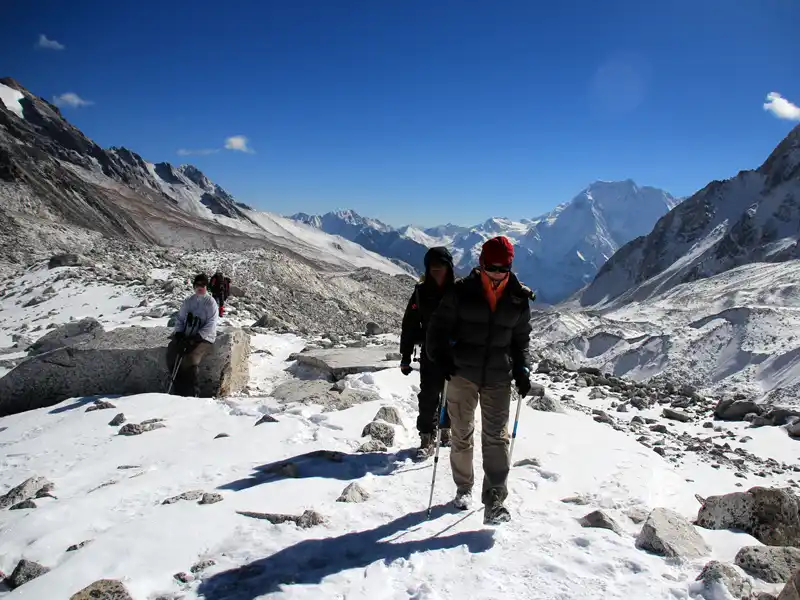
The Mount Manaslu Expedition is a technically demanding 8,000-meter climbing expedition that requires advanced mountaineering skills, excellent physical fitness, and strong mental resilience. Climbers must be experienced in glacier travel, fixed-rope techniques, snow and ice climbing, and high-altitude expedition climbing. The Mount Manaslu climbing route features steep snow slopes, technical ice walls, exposed ridges, deep crevasses, and avalanche-prone terrain, while unpredictable Himalayan weather and extreme temperatures add to the challenge. These demanding conditions make Mount Manaslu (8,163m) one of Nepal's most respected and rewarding mountaineering objectives for experienced climbers.
The expedition begins at Manaslu Base Camp, where climbers spend several days acclimatizing, preparing equipment, and planning their ascent. The standard Northeast Face route follows a series of high camps established above base camp before the final summit push. Proper acclimatization through multiple rotations between camps is essential for reducing the risk of altitude sickness and improving summit success. With the support of experienced Sherpa guides, careful expedition planning, and favorable weather conditions, climbers can safely navigate the mountain's technical terrain. The combination of expert logistics, strategic acclimatization, and technical climbing makes the Mount Manaslu Expedition one of the most challenging and rewarding Himalayan climbing adventures in Nepal.
Summit Experience and the Spiritual Value of Manaslu
The final summit push of the Mount Manaslu Expedition (8,163 m) is the most unforgettable and emotional moment of the entire journey. After weeks of acclimatization, careful preparation, and overcoming the challenges of the harsh Himalayan environment, climbers make their way toward the summit of the world’s eighth-highest mountain with determination and courage. Reaching the top of Mount Manaslu brings an incredible sense of achievement, offering breathtaking panoramic views of the surrounding Himalayan peaks and a once-in-a-lifetime feeling of standing above the clouds. More than just a technical climb, the Manaslu Expedition in Nepal is a deeply personal adventure that tests physical strength, mental resilience, and respect for nature. The remote landscapes, spiritual connection, and demanding climbing conditions create an experience that stays with climbers forever, making the Mount Manaslu Expedition one of Nepal’s most iconic and rewarding 8,000-meter Himalayan adventures for experienced mountaineers seeking a true challenge.
Manaslu Climbing Routes information
Mount Manaslu Expedition offers several climbing routes with varying difficulty, technical challenges, and objective hazards. This 8,163-meter Nepalese Himalayan peak requires careful route selection based on the expedition's goals, experience, and weather.
Northeast Face (Standard Route – Most Popular): The Northeast Face route is the most popular and standard route for Mount Manaslu expeditions. Climbers ascend through well-established northeastern highs from Manaslu Base Camp. Steep snow slopes, glacier travel, crevasses, and icefall sections make this route difficult but safer than others. Avalanche risks, Himalayan weather, and high-altitude challenges await climbers on the most popular route.
Northwest Face (More Technical Alternative Route): The Northwest Face of Mount Manaslu is a challenging and less-frequently-attempted alternative route. On this side, climbers face steep ice walls, mixed rock and ice, and tricky navigation. This route requires advanced mountaineering, ice-climbing, and high-altitude expedition skills, so only experienced climbers looking for a challenge should attempt it.
South Face (Most Difficult and Dangerous Route): The South Face is one of the most challenging and dangerous routes on Mount Manaslu. It has steep slopes, complex rock formations, unstable ice, and serious objective hazards. The South Face is difficult and dangerous, so expedition teams rarely attempt it. This challenging route is only for experienced alpinists with strong technical backgrounds.
East Face (Remote and Less Traveled Route): The East Face of Mount Manaslu is a remote and less-traveled climbing route. Climbers face mixed terrain, technical ice, and unpredictable conditions. This route suits expert-level expeditions that require adaptability, advanced climbing skills, and high-altitude Himalayan experience.
A successful summit attempt requires careful planning, a strategy for acclimatization, and an evaluation of the route. To ensure a safe and responsible expedition, all climbers must also obtain official permits from the Nepali government and adhere to local laws and environmental guidelines.